


It is a fair and practical question, and the answer is not a simple yes or no. Online fitness coaching has grown into a substantial industry over the past several years, producing everything from highly personalized, research-backed programs delivered by qualified coaches to low-cost template bundles dressed up with accountability language. The range of what “online fitness coaching” actually describes is wide enough that the question of whether it is worth it depends almost entirely on what you are evaluating — and whether the service you are considering is built around your specific goals or built around the convenience of selling to a large number of clients at once.
This guide gives you an honest, research-grounded answer to whether online fitness coaching is worth it — covering what the evidence says about its effectiveness compared to in-person training, what the real benefits are for busy professionals, where it falls short and why, and what to look for in a coaching program that actually delivers results rather than just access to a workout app. We also cover how the hybrid coaching model — which combines online coaching depth with regular in-person sessions — addresses the limitations that purely remote programs cannot resolve on their own.
Key Takeaways
- A 2022 study published in the National Institutes of Health’s PubMed database confirmed that remote online training effectively improves both muscle fitness and cardiovascular fitness — with the live-supervised delivery model producing the strongest outcomes, particularly for cardiovascular parameters.
- A study published in the Journal of Medical Internet Research found that online personal training produced similar improvements in cardiovascular fitness, muscular strength, and body composition compared to traditional in-person training when executed effectively.
- Over 80% of online coaching clients in published survey data report improved motivation and adherence to their fitness programs — a behavioral outcome that directly affects long-term results.
- The primary limitations of fully online fitness coaching are the absence of real-time physical technique correction, reduced relational depth compared to in-person coaching, and the inability to adjust training load based on how a client looks and moves on a given day.
- Online coaching is generally 30% more cost-accessible than equivalent in-person personal training, making it the entry point that allows more people to access professional fitness guidance over the sustained periods that produce lasting change.
- Whether online fitness coaching is worth it depends on your experience level, your specific goals, the qualification level of the coach, and whether the program includes genuine individualization or delivers shared templates with limited between-session support.
What the Research Actually Says About Online Fitness Coaching
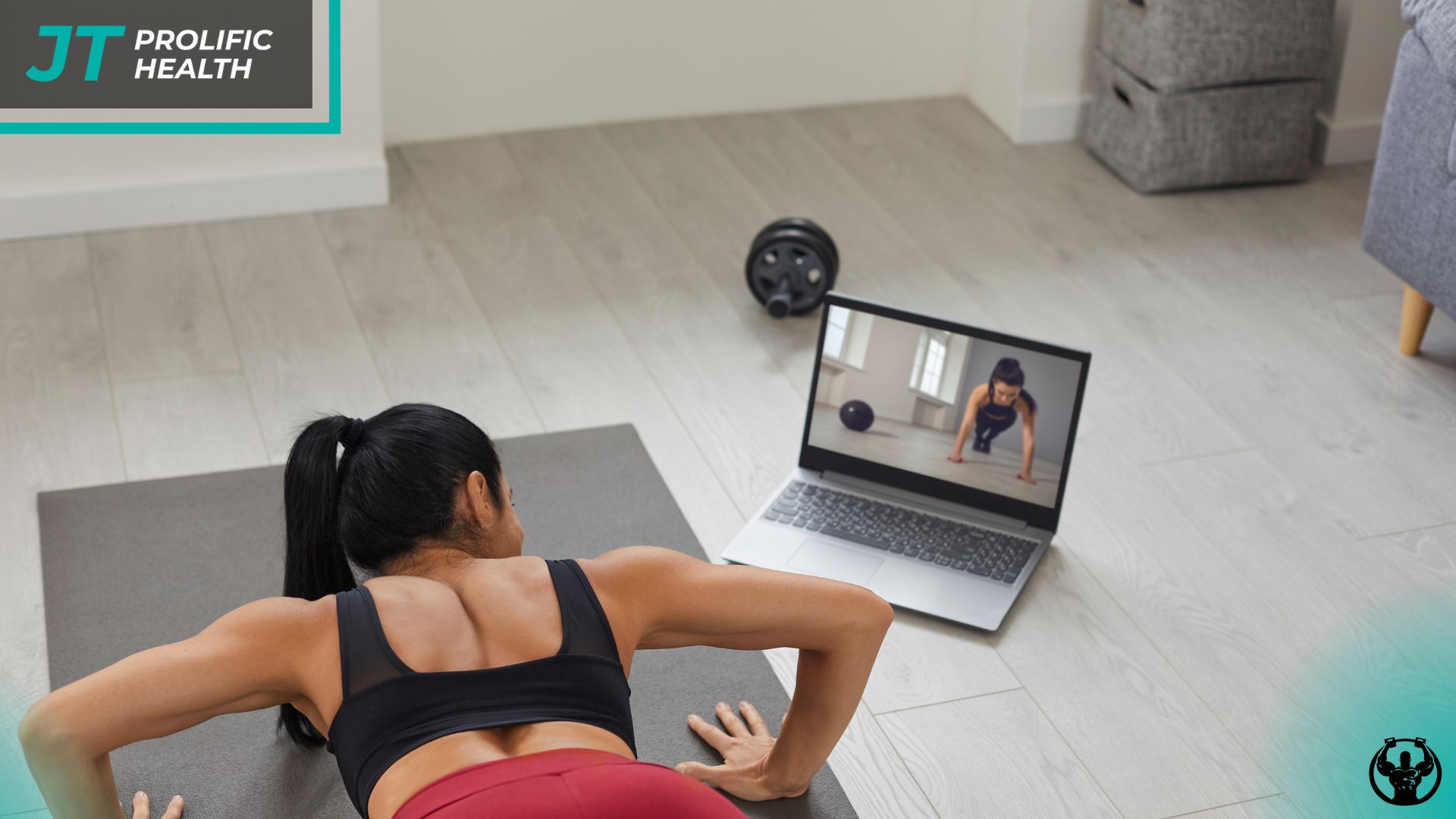
The question of whether online fitness coaching is worth it deserves a research-grounded starting point rather than anecdotal marketing claims. The evidence base has grown meaningfully since 2020, and the overall picture is more nuanced — and more encouraging — than either enthusiastic proponents or skeptical critics typically present.
A 2022 study published in the National Institutes of Health’s research database examined three different modalities of remote online training: live-supervised sessions via livestream, recorded video programs followed without supervision, and written programs followed without supervision. All three modalities produced measurable improvements in both muscle fitness and physical activity levels. The live-supervised model — closest in structure to a hybrid coaching relationship — produced the strongest outcomes, particularly for cardiovascular parameters. This finding is significant because it confirms that the human element of coaching contact matters even in an online delivery format: the presence of a qualified coach, even through a screen, produces better outcomes than a well-designed program followed in isolation. The full study is available through PubMed’s research database on remote online training effectiveness. A separate cross-sectional study published in 2024 found that online fitness training had a positive impact on body shape in 68.29% of participants, weight management in 76.82%, and mental health outcomes in 49.86% — figures that reflect meaningful real-world results across a diverse participant population. For context on how these outcomes compare to in-person training, our resource on what a hybrid personal trainer offers covers how the combined model addresses the gaps that remote-only coaching leaves behind.
What Online Coaching Delivers That Pure Self-Direction Cannot
The most important thing online fitness coaching provides that free programs, YouTube workouts, and downloaded PDF plans cannot is a structured, individualized coaching relationship — even if that relationship operates primarily through digital channels. A qualified online coach designs a program calibrated to your specific movement history, current fitness level, schedule constraints, available equipment, and goals. They track your progress over time, adjust the program as your capacity evolves or as life circumstances change, provide technique feedback on recorded exercise sets, and maintain accountability contact that catches dropout patterns before they become a full training halt. None of these functions are available in a self-directed fitness approach, regardless of how high-quality the free content you are following happens to be. The behavioral impact of this coaching contact is substantial: published survey data consistently shows that more than 80% of people working with online coaches report improved adherence to their fitness programs — a result that has compounding long-term consequences for health outcomes because consistency over months and years is the primary driver of meaningful fitness change.
The Real Benefits of Online Fitness Coaching for Busy Professionals
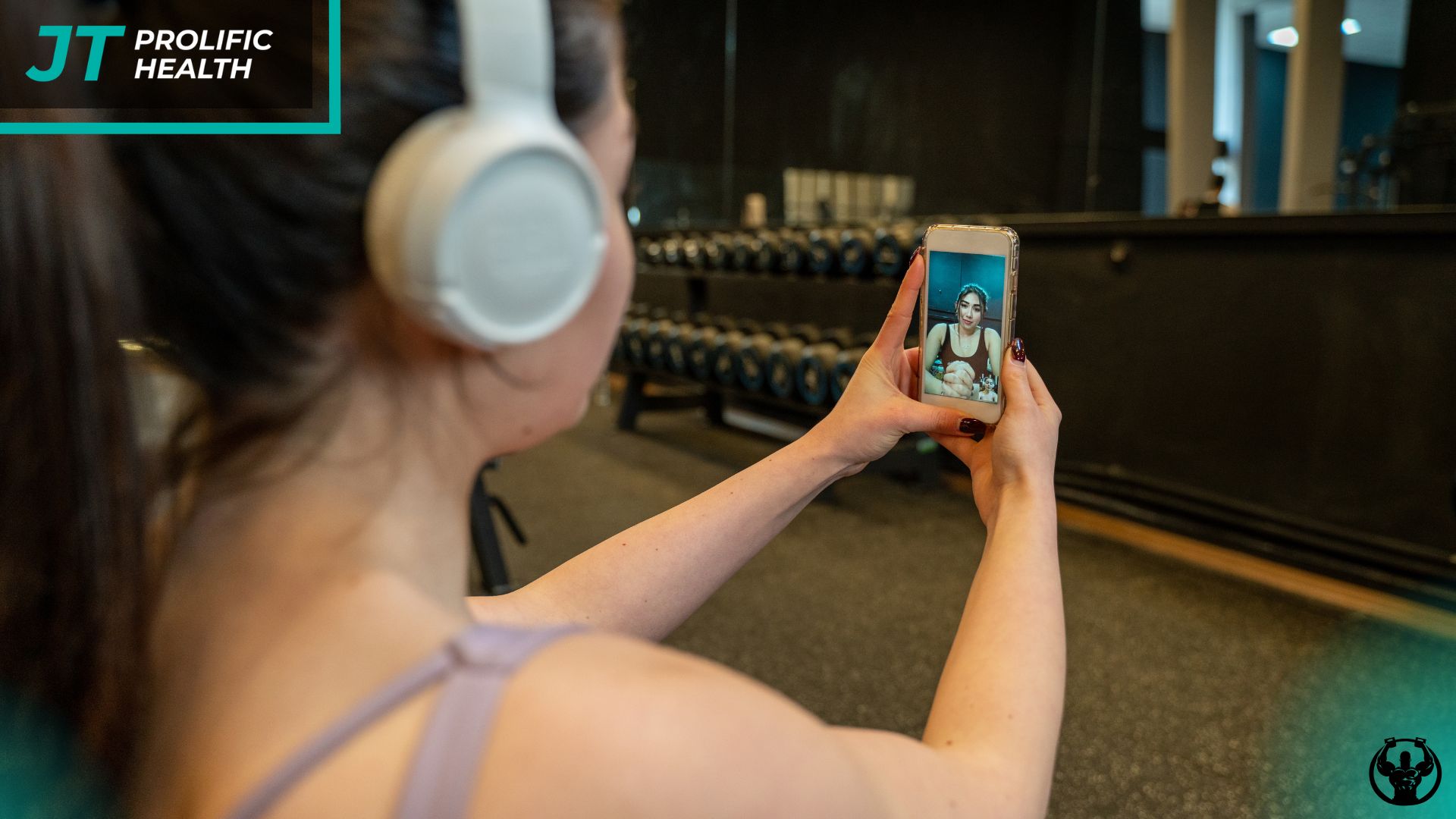
For working professionals and active parents — the people for whom schedule flexibility is not a preference but a functional necessity — online fitness coaching offers a set of practical advantages that in-person training cannot easily replicate at an equivalent price point.
Schedule flexibility is the most obvious benefit. Online coaching does not require you to be in a specific location at a specific time for most of your training sessions. You train when your schedule allows, at whatever gym or space is available to you that day, following a program that has already been designed and delivered to your device. This flexibility removes the single biggest structural barrier to consistent exercise for busy people: the fixed-time, fixed-location constraint that turns every schedule disruption into a missed session. For professionals who travel, work irregular hours, or carry significant family coordination responsibilities, the ability to train at 6:00 AM in a hotel gym or at 8:30 PM in a home setup — with a program already planned and ready — is the difference between a fitness habit that survives real life and one that collapses whenever life gets demanding.
Cost accessibility is the second major advantage. Online fitness coaching services are typically 30% more cost-effective than equivalent in-person personal training packages, according to analysis from the International Health, Racquet & Sportsclub Association. This pricing difference matters because fitness development requires sustained coaching engagement over months and years — not a six-week program. A coaching relationship you can afford to maintain for twelve consecutive months will produce substantially more meaningful results than a full-price in-person program you sustain for eight weeks before the cost forces a return to self-directed training. Online coaching’s affordability is therefore not just a convenience benefit — it is a sustainability benefit that directly affects the duration of your coaching engagement and, consequently, the depth of the results you achieve.
Accountability as the Core Value Proposition
The behavioral science behind why coaching works — online or otherwise — points consistently to accountability and ongoing coach contact as the two strongest predictors of exercise adherence. A coach who checks in when your session logs go quiet, who asks about your nutrition when you report low training energy, and who adjusts your program when you report that work stress has been elevated for three consecutive weeks is providing something fundamentally different from a streaming workout subscription or a purchased training plan. That active, responsive coaching presence — maintained across the full week rather than only during scheduled sessions — is what produces the motivation and adherence outcomes that research confirms over 80% of online coaching clients experience. The ACE Fitness research on client motivation and behavior change provides detailed context for understanding why this accountability mechanism produces behavioral outcomes that self-directed fitness reliably cannot sustain over time. Understanding how accountability connects to real fitness progress is also covered in our resource on why personal training accountability matters for clients making long-term fitness commitments.
Where Online Fitness Coaching Falls Short
Honest evaluation of whether online fitness coaching is worth it requires equal attention to its limitations — because those limitations are real and have direct consequences for specific client situations. Understanding them is what allows you to choose a coaching model that actually matches your needs rather than one that sounds compelling in its marketing and underdelivers in practice.
The most significant limitation of purely online fitness coaching is the absence of real-time physical technique correction. Exercise technique for foundational movements — squats, deadlifts, hip hinges, pressing patterns, pulling patterns — is difficult to assess accurately through video review alone, and even more difficult to correct precisely through asynchronous text or voice feedback. A coach watching a video of your squat can identify major movement faults. They cannot feel where your weight distribution is shifting, cannot apply the light tactile cue to your hip that immediately clarifies what verbal instruction cannot, and cannot make the real-time load adjustment based on how your movement quality changes as fatigue accumulates within a set. For clients who are new to strength training, who are returning after injury, or who are working through persistent movement compensations, this gap in technical coaching precision is not a minor inconvenience — it is a meaningful safety and effectiveness concern that affects both injury risk and the rate at which technique quality improves. A research comparison published in PubMed confirmed that the live-supervised training modality produced stronger results than both unsupervised video and written program modalities, specifically in the cardiovascular parameters where real-time coach response to effort and form matters most.
Relational Depth and the Limits of Digital Communication
The second meaningful limitation of fully online coaching is relational. Coaching effectiveness is significantly influenced by the quality of the coach-client relationship — the trust, the communication depth, and the coach’s ability to read a client’s physical and emotional state and adjust their approach accordingly. Face-to-face interaction builds this relational quality more effectively and more quickly than digital communication, regardless of how skilled both parties are at text and video-based communication. This is not an argument against online coaching — it is a recognition that the relational layer of a coaching relationship has a ceiling in a purely digital environment that an in-person relationship does not encounter. For clients who are highly self-motivated, have strong intrinsic fitness goals, and communicate effectively through digital channels, this relational limitation may be inconsequential. For clients who respond more strongly to in-person energy, who benefit from the physical accountability of someone watching them train, or who find digital communication impersonal enough to disengage from over time, the relational limitation of purely online coaching is a real obstacle to the sustained engagement that produces results. This is one of the most compelling practical reasons that the hybrid model — which preserves the flexibility of online coaching while adding regular in-person sessions to maintain relational depth and technique precision — produces better outcomes for many clients than a purely online program at the same investment level.
How to Evaluate Whether a Specific Online Coaching Program Is Worth It
The general question of whether online fitness coaching is worth it is less useful than the specific question: is this particular program worth what this particular coach is asking you to invest? The answer requires evaluating a specific set of program and coach quality indicators that most buyers of online fitness services do not assess before purchasing.
Start with the coach’s credentials. A qualified online fitness coach holds a recognized certification from an accredited body — NASM, NSCA, ACE, ACSM, or ISSA — and ideally carries additional specialty credentials relevant to the program they are delivering. A coach selling fat loss programming without a nutrition credential, or strength programming without a resistance training certification, is operating at the edge of their professional scope in ways that affect the quality and safety of the program. Ask directly about certifications and what they cover before committing. Second, evaluate the intake and individualization process: does the coach perform a detailed assessment of your movement history, current fitness level, health considerations, and goals before delivering your program? If a program arrives within 24 hours of signup without a meaningful intake conversation, it is almost certainly a template, not a personalized program. Third, ask specifically about check-in frequency and format. A coaching program that includes weekly check-in calls, video technique feedback, and responsive communication is delivering a substantively different service from one that includes monthly check-ins and a messaging inbox that sees one response per week. The coach-to-client ratio matters here — a coach managing too many clients simultaneously cannot maintain the response quality that the high-engagement programs require. Our resource on how to choose a personal trainer walks through the full qualification and service evaluation framework that applies equally to online and in-person coaching decisions.
The Hybrid Model: Where Online Coaching Meets In-Person Quality
For many clients asking whether online fitness coaching is worth it, the most accurate answer is: online coaching is worth it, and adding a structured in-person component makes it worth considerably more. The hybrid coaching model — which combines regular face-to-face sessions with structured online coaching support between those sessions — captures the core advantages of online coaching (flexibility, cost accessibility, consistent weekly programming) while addressing its primary limitations (technique precision, relational depth, real-time load adjustment). This is why the hybrid model has become the fastest-growing coaching format in the fitness industry, and why fitness professionals who work with busy clients consistently recommend it over purely online alternatives for clients who have the geographic proximity to make occasional in-person sessions practical.
In a hybrid program, the online component handles the full-week consistency layer: structured programming for independent training days, progress tracking, nutrition guidance, check-in accountability, and video feedback. The in-person sessions handle the precision work that digital coaching cannot replicate: movement assessment, technique instruction under direct supervision, supervised load progressions to new weight benchmarks, and the relational contact that deepens the coaching relationship over time. The total investment for a hybrid program is typically modestly higher than a purely online program at equivalent online coaching depth — but the return in terms of training quality, safety, and long-term adherence is substantially greater for the clients who have consistently required in-person accountability and technique support to stay on track. For a full picture of what the hybrid model includes and how it is structured across different levels of service, our resource on Prolific Health’s hybrid coaching program covers every aspect of the service from intake through long-term progression.
The Cost of Getting It Wrong: Why Cheap Online Coaching Often Costs More
The financial logic of choosing the lowest-cost online coaching option deserves honest examination. Budget-level online coaching programs — $30 to $80 per month for a shared template with limited coach interaction — have a very high dropout rate, because the accountability structure and individualization quality are insufficient to sustain engagement through the periods when motivation alone is not enough to keep someone executing a training program. A client who purchases a $50-per-month template program, follows it inconsistently for six weeks, and then abandons it has spent $100 and achieved minimal progress. They then face the same fitness starting point — and often the same belief that they “can’t stick to a program” — that they had before they started. This cycle is expensive in both money and in the lost opportunity cost of the fitness progress that a better-matched program would have produced. A mid-range online coaching program at $200 to $350 per month with genuine individualization, weekly check-ins, and active technique feedback costs more per month but produces the consistency rate that generates real, cumulative results — making the total cost per unit of meaningful fitness progress considerably lower than the budget option’s apparent saving. For clients evaluating whether to invest in professional coaching at a level that actually works, our resource on how to price hybrid personal training provides the full cost-to-value framework for all coaching formats.
Ready to Find Out What Coaching Actually Feels Like? Talk to Our Team
At Prolific Health, located at 7471 Blundell Road, Richmond, BC V6Y 1J6, Canada, we offer private one-on-one personal training, group strength coaching, and our full hybrid coaching program — each built on recognized professional credentials, a thorough intake process, individualized programming, and an active coaching relationship that supports clients across their full training week rather than only during scheduled sessions. Founder and lead trainer Jason Tam leads a team that works primarily with busy professionals who have tried self-directed fitness and generic programs and are ready for a coaching relationship that actually fits their life. If you want to understand whether online fitness coaching is worth it in the context of your specific goals, schedule, and fitness history — or whether our hybrid model gives you a better return for your investment — call us at +1 604 818 6123 for a complimentary consultation. The answer to whether it is worth it becomes clear very quickly in a direct conversation with a coach who knows what it actually takes to produce consistent results.
Common Questions About Is Online Fitness Coaching Worth It
Is online fitness coaching as effective as in-person personal training?
Q: Is online fitness coaching as effective as in-person personal training?
A: Research published in the Journal of Medical Internet Research found that online personal training produced similar improvements in cardiovascular fitness, muscular strength, and body composition compared to in-person training when executed effectively. A 2022 PubMed study confirmed remote online training improves both muscle and cardiovascular fitness across delivery modalities, with live-supervised online training producing the strongest results. Effectiveness depends significantly on coach qualification level, program individualization, and client adherence — variables that vary across programs regardless of delivery format.
What is a reasonable monthly cost for online fitness coaching?
Q: What is a reasonable monthly cost for online fitness coaching?
A: Budget-level online coaching programs with shared templates and limited interaction run from $30 to $100 per month. Mid-range programs with genuine individualization, weekly check-ins, and active feedback typically cost $150 to $350 per month. Premium online coaching with high-frequency interaction and comprehensive nutrition guidance runs from $300 to $500 per month. Industry analysis indicates online coaching is typically 30% more cost-effective than equivalent in-person training — the value comparison depends on what the online program actually includes rather than its headline price.
Who benefits most from online fitness coaching?
Q: Who benefits most from online fitness coaching?
A: Online fitness coaching works best for people with scheduling constraints that make consistent in-person attendance difficult, those with moderate to good existing exercise technique who do not require intensive real-time technique correction, self-motivated individuals who can execute structured programs independently, and those for whom budget accessibility is a factor in choosing a coaching format. Beginners with very limited exercise history or significant movement restrictions typically benefit more from a higher in-person coaching frequency during the foundational phase of their program.
What should I look for in an online fitness coach before paying?
Q: What should I look for in an online fitness coach before paying?
A: Evaluate the coach’s primary certification body and whether it is accredited by the National Commission for Certifying Agencies. Assess the intake process — does the coach conduct a thorough assessment of your history, goals, and schedule before delivering a program? Ask about check-in frequency, how technique feedback is delivered, and how many active clients the coach carries. A coach with an overloaded client roster cannot maintain the response quality that makes online coaching effective. Ask for an example of how a previous client’s program was adjusted when their circumstances changed.
Can online fitness coaching help with weight loss specifically?
Q: Can online fitness coaching help with weight loss specifically?
A: Yes. A 2024 cross-sectional study found that online fitness training had a positive impact on weight management in 76.82% of participants. Published data from online coaching programs indicates clients using this model often experience meaningful body composition improvements when the program includes structured resistance training, cardiovascular conditioning, and nutrition guidance together. Weight loss outcomes depend on the integration of training and nutritional coaching, the program’s adherence support structure, and consistency of client execution over a sustained period.
What is the difference between an online coaching program and a fitness app subscription?
Q: What is the difference between an online coaching program and a fitness app subscription?
A: A fitness app subscription provides access to pre-recorded workout content or algorithm-generated programs without an individualized human coaching relationship. An online coaching program involves a qualified coach who designs your program based on a personal assessment, provides feedback on your specific performance data, adjusts the program as your capacity and circumstances evolve, and maintains active accountability contact throughout the week. The coaching relationship — with its individualization, feedback, and accountability functions — is what distinguishes professional online coaching from a digitally delivered workout subscription.
How does the hybrid coaching model compare to purely online coaching?
Q: How does the hybrid coaching model compare to purely online coaching?
A: A hybrid coaching model adds regular in-person sessions to the online coaching structure, addressing the primary limitations of fully remote programs: real-time technique correction, supervised load progressions to new weight levels, and the relational depth that face-to-face interaction builds more effectively than digital communication. Hybrid coaching captures the flexibility and cost advantages of online coaching while producing the technique precision and accountability quality of in-person training. For clients who have the geographic proximity to make occasional in-person sessions practical, the hybrid model generally delivers better outcomes per invested dollar than a purely online alternative.
Is online fitness coaching worth it for experienced exercisers with established technique?
Q: Is online fitness coaching worth it for experienced exercisers with established technique?
A: Experienced exercisers with solid foundational technique and a good understanding of training principles often get strong value from online coaching because they can execute a structured program accurately and independently between coaching contacts. The primary value they receive is in program quality — a well-periodized, progressive program designed by a qualified coach produces better results than self-programmed training even for experienced exercisers — and in the accountability and check-in structure that maintains consistency through the demanding periods when motivation alone is insufficient.
Conclusion
Online fitness coaching is worth it — under the right conditions, with the right program, and from a qualified coach who delivers genuine individualization and active accountability rather than a digital product with coaching language. The research confirms it produces real results. The flexibility advantage is genuine. The cost accessibility is meaningful for anyone who needs professional guidance over the months and years that lasting fitness change requires. And the behavioral data on adherence and motivation — over 80% of clients reporting improved consistency — reflects an outcome that most self-directed fitness attempts cannot match.
The honest addendum is that not all programs labeled as online fitness coaching deliver these outcomes. The gap between a well-run professional coaching program and a shared template with a check-in email is wide — and the way to find out whether any specific program is on the right side of that gap is to ask the questions this guide has outlined before you commit your money and your training months to finding out the hard way. If you want to understand whether online fitness coaching is worth it for your specific goals and situation — or whether our hybrid program at Prolific Health gives you a better return — call +1 604 818 6123 and have that conversation directly with Jason Tam and our coaching team. Our guide on online coaching versus in-person training provides additional detail for clients still working through which format best fits their needs before taking that next step.