
When you type what does a fitness coach do, you’re usually asking a deeper question: “Will this person help me get results in a way I can keep doing?” Most busy professionals don’t need more workout ideas; you need a plan that respects your calendar, your stress, your sleep, and your body.
A fitness coach’s job is to turn scattered effort into a clear process: we help you choose the right actions, at the right intensity, in the right order, then we keep you accountable long enough for results to show up. That includes training, recovery, and mindset—because your life is the training environment, not a perfect schedule on paper.
Key Takeaways
A fitness coach does more than “write workouts”: we assess, plan, teach, adjust, and keep you accountable over time (related: What Services Can You Expect From A Personal Trainer?).
For adults, a sensible baseline often includes weekly aerobic activity plus muscle-strengthening days, then we scale it to your reality (see: Prolific Health Guides You Through Cardiovascular Exercises).
Strength progress relies on gradual progression (not random intensity), using variables like load, volume, rest, and exercise choice (program structure example: Exploring Microcycle Training for Optimal Performance Gains).
Coaching helps busy people avoid grind culture by balancing effort with recovery so you can repeat the week (see: Online Coaching).
If DIY workouts keep stalling, Prolific Health coaching—1-on-1 Private Training, Group Strength & Conditioning, or Hybrid Personal Training & Coaching—adds safety checks and follow-through.
Overview
In this guide, you’ll get a clear, people-first answer to “what does a fitness coach do,” with real examples of what coaching looks like week to week: goal-setting, program design, technique coaching, recovery planning, and accountability systems that fit demanding lives. We’ll also explain where coaching overlaps with personal training and where it differs, so you can choose the support level that matches your needs (related: What Services Can You Expect From A Personal Trainer?).
You’ll learn what to look for in a coach, how progress is measured beyond the scale, and why steady training beats short bursts of extreme effort for busy professionals. We’ll finish with common questions and a practical next step if you want guided support (start here: Contact Prolific Health).
What a fitness coach does (clear definition)
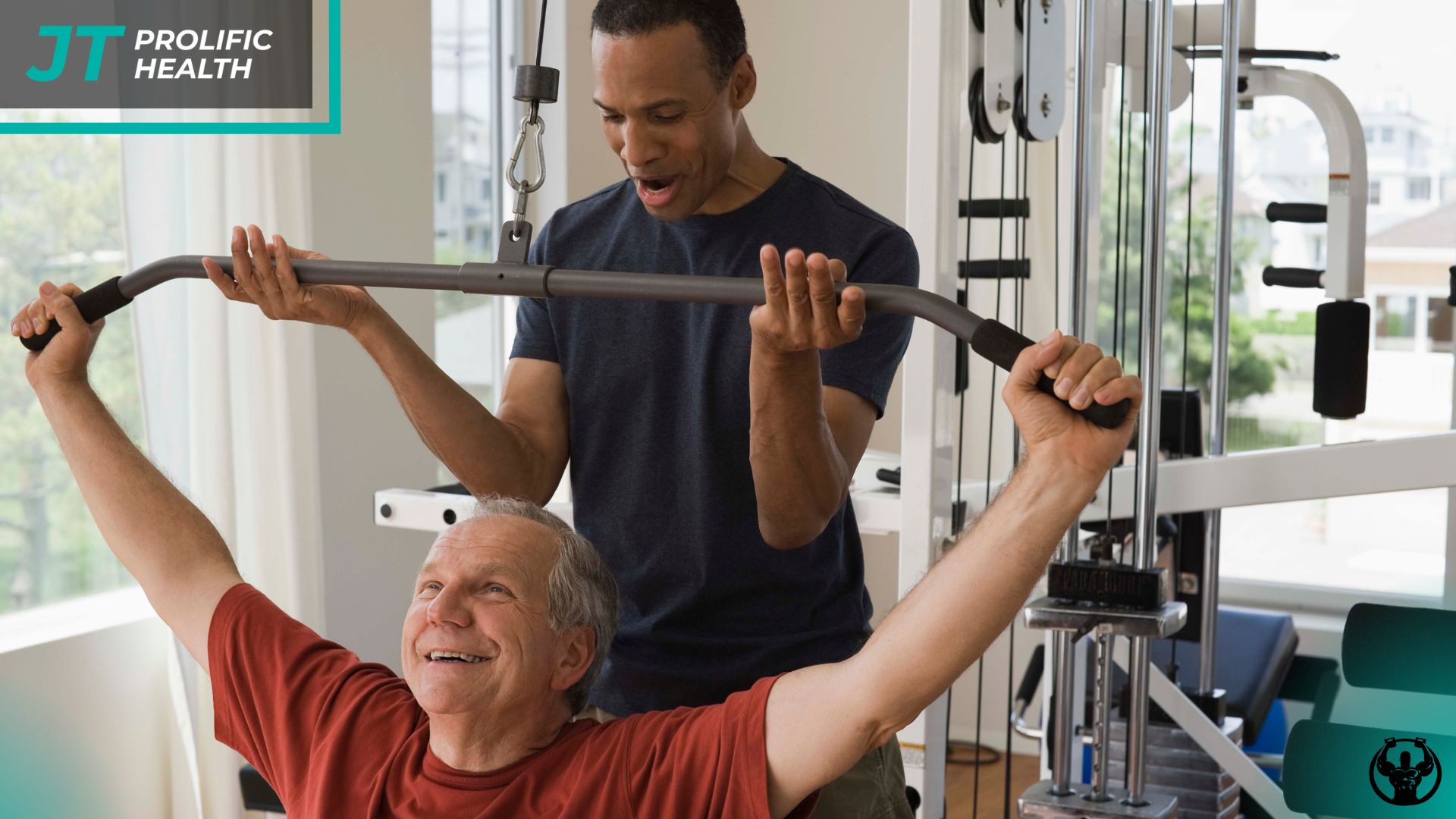
A fitness coach helps you improve health and performance by assessing your starting point, building a progressive plan, teaching you how to do it safely, and keeping you consistent with feedback and adjustments (see: Online Coaching).
The “behind-the-scenes” work you don’t see
Coaching often includes:
Translating your goal into weekly actions you can repeat (framework: Prolific Health’s Approach to Outcome Goals Setting).
Choosing exercises you can do safely with your equipment and time (getting-started support: How to Prepare for Personal Training: Beginner’s Guide).
Adjusting the plan when stress, sleep, travel, or aches change your capacity (service model: Hybrid Personal Training & Coaching).
Tracking progress in ways that actually guide decisions (service expectations: What Services Can You Expect From A Personal Trainer?).
If you’ve been stuck rotating random workouts, this is the missing layer: decision-making and follow-through.
Assessment and goal setting (where progress starts)
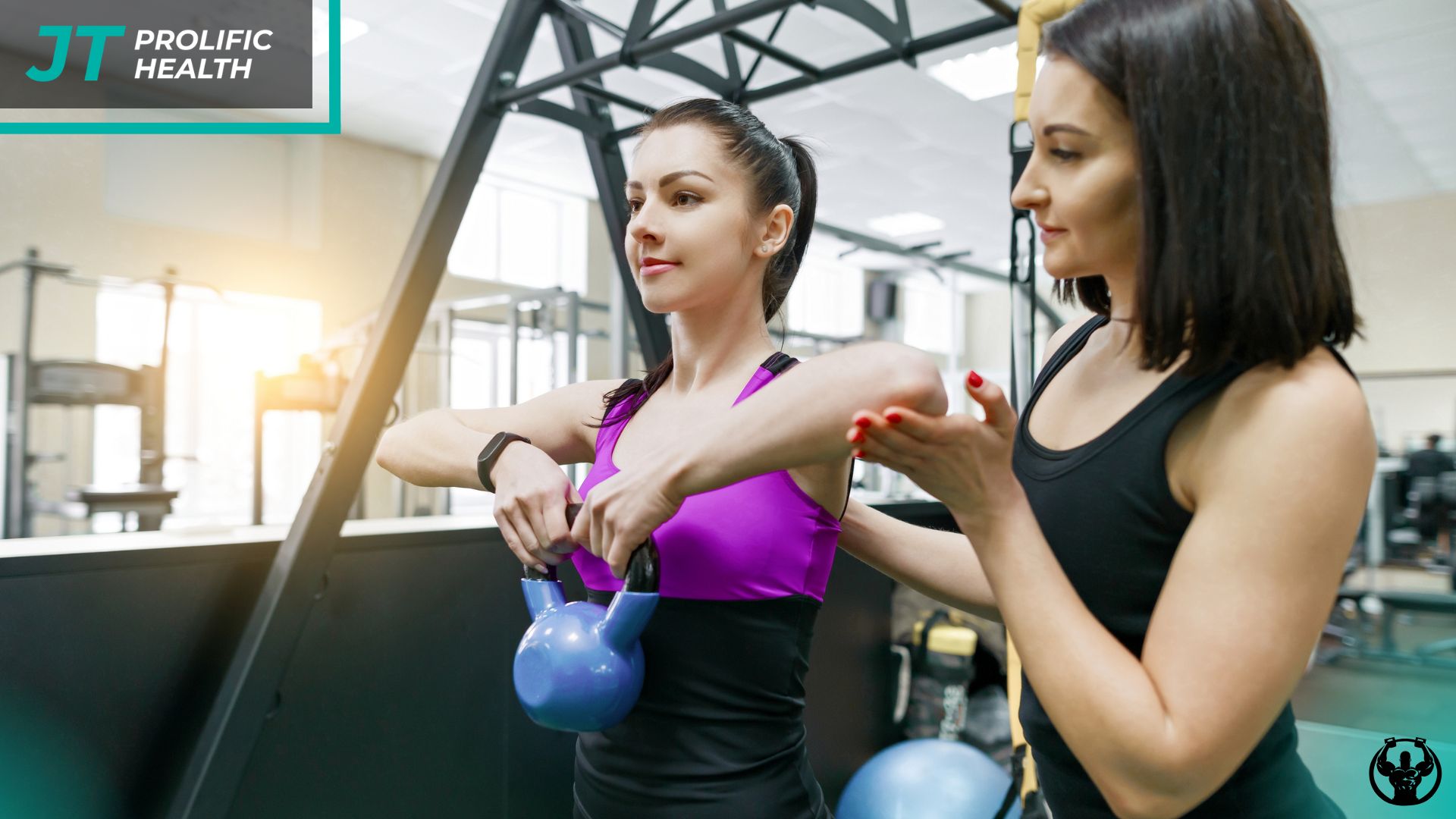
A coach begins by learning your constraints, because your plan must fit your real life to work long-term. That means we look at schedule, work stress, sleep pattern, injury history, and what you will realistically do on a “messy week” (starting point: Online Coaching).
Turning “I want results” into an actual target
We help you turn vague goals into concrete outcomes and process goals, such as:
Outcome: “Feel stronger and lose body fat.”
Process: “Strength train 2–3 days/week, add two short cardio sessions, hit a basic protein habit, walk after lunch.”
If you want a structured way to do this, our guide on outcome goals framework is a useful starting point: Prolific Health’s Approach to Outcome Goals Setting.
Using public guidelines as a baseline (then personalizing)
For many adults, a practical baseline is the CDC’s guidance: at least 150 minutes of moderate-intensity activity per week plus 2 days of muscle-strengthening activity. We can scale that down at first if you’re exhausted or returning after time off, or scale it up if you have capacity—without turning it into an all-or-nothing standard (conditioning primer: Prolific Health Guides You Through Cardiovascular Exercises).
Program design and progression (how we make it work)
A coach organizes your training so it’s progressive, repeatable, and safe. This is where “fitness advice” becomes an actual system: exercise selection, weekly structure, intensity, and progression rules (see: 1-on-1 Private Training).
What progression looks like for real people
Progress isn’t only “add weight.” It can be:
Add a rep with good form.
Use a slightly harder variation.
Add a set only when recovery is stable.
Reduce rest time modestly.
Improve range of motion without pain.
A classic ACSM position stand on resistance training progression explains that continued adaptation requires progressive resistance training and discusses manipulating training variables over time. In plain language: we don’t guess—we adjust training stress gradually so your body can adapt while your life stays functional (planning structure example: Exploring Microcycle Training for Optimal Performance Gains).
A week that fits busy schedules
Many busy professionals do well with:
2–3 strength sessions (full body or upper/lower).
2–3 short cardio sessions (walks count; see: Prolific Health Guides You Through Cardiovascular Exercises).
1–2 recovery-focused days (mobility + easy movement).
If you’re new to coached training and want to know how to show up confidently, read: How to Prepare for Personal Training: Beginner’s Guide.
Technique coaching and injury risk reduction
One of the most valuable answers to “what does a fitness coach do” is simple: we keep you doing the right thing, the right way, long enough to benefit. That means coaching technique, choosing appropriate movements, and pacing training so your joints aren’t paying the price for ambition (hands-on option: 1-on-1 Private Training).
Form feedback: why it matters
When form breaks down, the exercise changes—often without you noticing. A coach watches movement quality, gives cues you can actually apply, and chooses regressions or progressions based on how you move that day (supporting read: How to Prepare for Personal Training: Beginner’s Guide).
“Hard” is not the same as “smart”
Busy people often swing between two extremes: going too hard when motivated, then stopping when sore or overwhelmed. A coach helps you train hard enough to improve while staying fresh enough to repeat the week, because repeatable weeks create results (see: Hybrid Personal Training & Coaching).
Recovery, stress, and mindset (the holistic layer)
Training is the stimulus; recovery is where you adapt. For busy professionals and parents, recovery is frequently the bottleneck, so coaching has to include it (service model: Online Coaching).
Recovery coaching that’s practical
We help you build recovery that fits your life:
Sleep consistency (even if duration can’t be perfect yet).
Low-intensity movement on stressful days.
Mobility work that targets your “tight spots.”
Nutrition habits that support training without turning eating into homework.
For a simple conditioning reference point, the CDC adult activity overview is a helpful baseline you can compare your week against. If you want a Prolific Health primer on cardio, our article on cardiovascular exercise basics can help you choose an approach you’ll actually do: Prolific Health Guides You Through Cardiovascular Exercises.
Why grind culture backfires
Grind culture often ignores recovery and treats fatigue as proof of commitment. For busy people, that approach tends to collide with work and family demands, which can lead to inconsistency, frustration, and “starting over” cycles. Coaching replaces that cycle with pacing, planning, and flexibility (see: Online Coaching).
Accountability and behavior change (what keeps it going)
A coach is a guide and a guardrail. You still do the work, but you don’t have to do it alone (see: Online Coaching).
What accountability looks like (without guilt)
Accountability can be:
Scheduled sessions (in-person or online).
Check-ins that review wins, barriers, and next actions (see: Online Coaching).
Progress tracking that supports decisions (not perfectionism) (see: What Services Can You Expect From A Personal Trainer?).
“Minimum effective” plans for high-stress weeks.
This is also where many DIY routines fall apart: without feedback and a plan that evolves, it’s easy to drift or stall.
Coaching options that match your life
At Prolific Health, we support different levels of structure:
Private Training for hands-on coaching and technique work: 1-on-1 Private Training.
Group Strength for energy, community, and consistency: Group Strength & Conditioning.
Hybrid Coaching for flexible support when schedules shift: Hybrid Personal Training & Coaching.
If you’re wondering about the value tradeoff, this article offers a practical way to think about cost vs outcomes: Is Personal Training Worth It? A Cost-Benefit Analysis.
Fitness coach vs personal trainer (simple explanation)
A “fitness coach” and “personal trainer” can overlap, and titles vary across the industry. Many explanations frame coaching as broader lifestyle support (habits, stress, recovery) while personal training may focus more on exercise instruction and session delivery, though real-world roles often blend (see: What Services Can You Expect From A Personal Trainer?).
What matters most is not the label—it’s the service you’re getting:
Do you receive an assessment, a progressive plan, and ongoing adjustments? (see: Online Coaching).
Are you taught technique and given safety-focused progression? (see: 1-on-1 Private Training).
Are recovery and lifestyle constraints built into the plan? (see: Hybrid Personal Training & Coaching).
Those answers tell you whether you’re getting coaching or just workouts.
Get coached with Prolific Health
If you want a clear answer to what does a fitness coach do in your life specifically, we’ll talk through your schedule, stress level, injury history, and goals, then recommend the right support level—1-on-1 Private Training, Group Strength & Conditioning, or Hybrid Personal Training & Coaching—so you’re not relying on DIY workouts forever.
Prolific Health is located at 7471 Blundell Road, Richmond, BC, V6Y1J6, Canada, and you can call +1 604 818 6123 to book a start conversation with our team (contact details also appear on the site: Contact, and the same address/phone are stated on Is Personal Training Worth It?).
CTA sentence you can insert in your conclusion: If you’ve been asking what does a fitness coach do, Prolific Health will show you with a safe plan, real accountability, and coaching you can keep.
Common Questions About the what does a fitness coach do
Q: What does a fitness coach do that a workout app can’t?
A: A coach makes decisions with you, not just for you: we adjust training based on stress, sleep, pain signals, and progress trends. Apps can provide templates, but they can’t watch your technique, modify your plan during chaotic weeks, or help you choose the smallest plan you’ll repeat consistently (see: Hybrid Personal Training & Coaching).
Q: What does a fitness coach do in the first session?
A: We usually clarify your goals, discuss constraints (time, stress, injuries), and establish a realistic weekly structure. We may also run a few simple movement checks and start with a conservative training dose to see how your body responds (getting-started read: How to Prepare for Personal Training: Beginner’s Guide).
Q: What does a fitness coach do for weight loss, specifically?
A: A coach builds a routine you can sustain long enough to create change: consistent strength training, sensible weekly activity, and nutrition habits that don’t collapse under stress. Many adults use a baseline that includes aerobic activity plus muscle-strengthening days, then scale it to their lifestyle (see: Online Coaching and Prolific Health Guides You Through Cardiovascular Exercises).
Q: What does a fitness coach do to help with back or knee pain?
A: We don’t “treat” injuries, but we can coach safer movement patterns, adjust exercise selection, and manage training volume so you build strength without flaring symptoms. We also help you spot patterns (sleep, sitting time, stress) that can influence pain and recovery, then adapt the plan accordingly (see: 1-on-1 Private Training).
Q: What does a fitness coach do if I keep losing motivation?
A: We reduce reliance on motivation by building structure: scheduled sessions, check-ins, and a plan that includes easier “minimum effective” weeks when life spikes (see: Online Coaching).
Q: What does a fitness coach do to build strength safely?
A: We use progressive overload, but we apply it gradually and strategically—through reps, load, sets, rest, or exercise changes—so you adapt without constant burnout (program progression example: Exploring Microcycle Training for Optimal Performance Gains).
Q: What does a fitness coach do to support recovery?
A: We coach recovery as part of the plan: sleep consistency, lower-intensity movement, mobility work, and nutrition habits that support training, and we use weekly structure that fits your capacity (see: Online Coaching and Prolific Health Guides You Through Cardiovascular Exercises).
Q: What does a fitness coach do week to week?
A: Week to week, coaching often includes reviewing your adherence, adjusting the plan, and progressing training when recovery is stable. We also troubleshoot barriers (travel, deadlines, kids’ schedules) and keep the plan practical (see: Hybrid Personal Training & Coaching).
Q: What does a fitness coach do, legally or professionally, that signals trust?
A: A trustworthy coach stays within scope, uses safe progression, and communicates clearly about goals, expectations, and limitations. You should also expect professionalism around screening, referrals when needed, and transparent coaching processes (service expectations: What Services Can You Expect From A Personal Trainer?).
Conclusion
So, what does a fitness coach do? We turn your goal into a repeatable plan, teach you how to train safely, help you recover like an adult with a full calendar, and keep you accountable long enough for progress to stick.
If you’re ready to stop guessing and start building momentum you can keep, Prolific Health can support you through 1-on-1 Private Training, Group Strength & Conditioning, or Hybrid Personal Training & Coaching—and you can reach us any time via the Contact page.