
You’ve probably seen the phrase show up in fitness programs, sports schedules, and gym class descriptions — but if you’ve ever stopped and asked yourself what a conditioning workout actually is, you’re asking exactly the right question. The answer matters more than most people realize, because conditioning sits at the heart of what separates training that produces lasting physical change from exercise that just keeps you busy.
A conditioning workout is not just another word for cardio. It’s a structured, purposeful approach to training your body’s energy systems, movement quality, and physical capacity so that you can perform better, recover faster, and feel stronger in everything you do — from a demanding workday to a weekend hike to simply climbing a flight of stairs without losing your breath. The scope of conditioning is broader and more practical than most fitness labels suggest, and understanding it properly can completely reshape how you think about building a sustainable fitness routine.
This guide breaks down what a conditioning workout is, why it matters for everyday people (not just athletes), what its core components are, and how to build a program that actually works — with or without a gym.
Key Takeaways
-
A conditioning workout trains multiple physical capacities at once — endurance, strength, speed, agility, and mobility — rather than isolating a single quality. (See: Types of Exercises for All Fitness Levels: Complete Guide.)
-
Both aerobic and anaerobic conditioning have distinct benefits, and a well-rounded program develops both systems over time. (Related: Endurance Training Methods to Improve Your Stamina.)
-
Conditioning workouts are time-efficient — combining cardiovascular and strength elements into a single session is one of the most effective ways to train with a packed schedule. (Related: Optimal Workout Duration for Fitness Goals.)
-
Recovery is a required component, not a bonus. Without structured rest, conditioning gains plateau and injury risk climbs. (Related: Essential Workout Recovery Tips for Faster Results.)
-
Progressive overload drives results. Without increasing challenge over time, the body adapts and stops improving. (Related: Exploring Microcycle Training for Optimal Performance Gains.)
-
Professional coaching accelerates progress by providing structure, correct programming, and real-time accountability that self-directed training rarely sustains. (See: 1-on-1 Private Training, Group Strength & Conditioning, Hybrid Personal Training & Coaching.)
Overview
This article answers the question of what is a conditioning workout from the ground up — covering the definition, the science of how it works, the types of conditioning training, what makes a session genuinely effective, and how mindset and recovery fit into the full picture. We also address common misconceptions, explain why grind-focused training often backfires for busy people, and cover the most frequently asked questions beginners and experienced exercisers have about this style of training. By the end, you’ll have a clear, practical framework for building conditioning into your life — and a strong case for why working with a qualified coach takes your results from possible to consistent.
The Definition: What Is a Conditioning Workout?

At its core, a conditioning workout is a training session designed to improve your body’s overall physical capacity — specifically, how efficiently it produces energy, sustains effort, and recovers from physical demands. According to a clinical review by Physio-Pedia, strength and conditioning involves “the selection and development of dynamic and static exercises used to improve physical performance,” covering mind, mobility, stability, strength, endurance, power, speed, and agility.
What separates a conditioning workout from generic exercise is intentionality. Every element — the exercise selection, the work-to-rest ratios, the intensity, and the progression — serves a specific physiological purpose. It’s the difference between showing up and moving for an hour versus training in a way that systematically makes your body stronger, more efficient, and more resilient over weeks and months.
Mass General Brigham’s sports performance team describes conditioning as training your energy systems — aerobic and anaerobic — to manage physical demands across sustained effort and explosive bursts alike. Both systems matter, and a well-built conditioning workout addresses both, often within the same session.
What a Conditioning Workout Actually Trains
Cardiovascular and Muscular Endurance
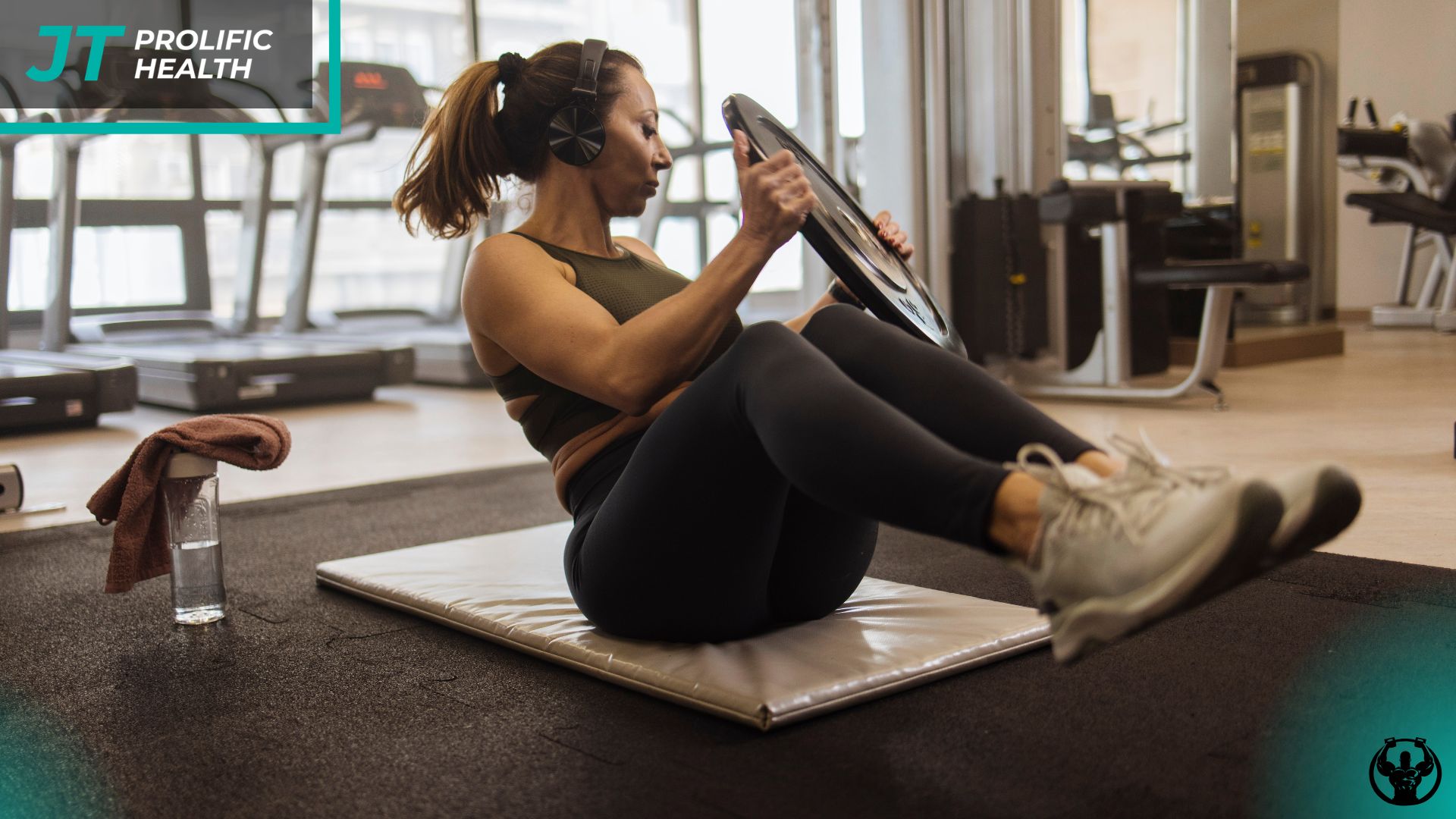
Endurance is the ability to sustain physical output over time, and it comes in two forms. Cardiovascular endurance refers to how effectively your heart and lungs supply oxygen to working muscles during prolonged activity. Muscular endurance refers to how long individual muscles can contract repeatedly before fatigue sets in. A conditioning workout builds both simultaneously — this is what makes it more comprehensive than standard cardio or isolated strength sessions.
Zone 2 aerobic training — steady, moderate-intensity effort at roughly 60–70% of your maximum heart rate — is one of the most effective tools for improving cardiovascular endurance. It builds mitochondrial density in your muscle cells (your cellular energy factories), increases fat oxidation efficiency, and creates the aerobic base that supports all other forms of training. For busy professionals who feel chronically fatigued, building this aerobic foundation is often the single fastest path to having more consistent energy throughout the day. (Related: Endurance Training Methods to Improve Your Stamina.)
Strength and Power
Strength is the capacity to generate force — and it shows up in every physical demand you face, from lifting children to loading groceries to performing a weighted squat. In a conditioning context, strength work focuses on functional movement patterns: pushing, pulling, hinging, squatting, and rotating. These patterns build the muscular foundation that allows everything else in your conditioning work to improve. (Related: Discover Strength Training Benefits with Prolific Health in Richmond.)
Power combines strength with speed, and it’s the physical quality that allows you to move explosively — a fast change of direction, a jump, or a sudden reactive movement. Power output declines significantly with age if it’s not trained, making it one of the most important qualities to include in a conditioning program for long-term health and independence, not just athletic performance. (Related: Power Training Techniques for Boosting Athletic Performance.)
Speed, Agility, and Mobility
Speed and agility refer to how quickly and accurately your body can move and react — qualities that reduce fall risk, improve athletic performance, and support the neuromuscular coordination that keeps your joints safe during intense effort. Mobility — the range of motion available at a joint combined with the strength to control it — determines whether your body can access the positions required to move well during a conditioning workout. Poor mobility doesn’t just limit performance; it leads to compensatory movement patterns that build up strain over time. (Related: Enhance Your Mobility with Functional Exercises Prolific Health.)
The Two Energy Systems at the Core of Every Conditioning Workout
Aerobic Conditioning
Aerobic conditioning trains your body’s ability to produce energy using oxygen over extended periods. It’s what allows you to sustain effort — whether that’s a 40-minute run, a long strength circuit, or simply getting through a physically demanding day without bottoming out. Aerobic sessions develop your heart’s stroke volume (how much blood it pumps per beat), lower resting heart rate, and increase your body’s capacity to use fat as a primary fuel source.
Low-intensity steady-state cardio — walking, cycling, rowing, or swimming at a controlled pace — is the backbone of aerobic conditioning. But aerobic conditioning also develops during longer-duration circuit sessions and any work performed in the aerobic heart rate zone, making it highly accessible regardless of equipment or location. (Related: Prolific Health Guides You Through Cardiovascular Exercises.)
Anaerobic Conditioning
Anaerobic conditioning trains the energy systems your body uses when oxygen can’t keep up with demand — during sprints, heavy lifts, explosive jumps, or any near-maximal intensity effort lasting from a few seconds to about two minutes. High-Intensity Interval Training (HIIT) is the most studied and widely applied method for developing anaerobic capacity.
A well-structured HIIT session pushes your body into maximum effort intervals followed by deliberate recovery periods, producing several significant adaptations: improved VO₂ max (your body’s ceiling for oxygen use during exercise), a raised lactate threshold (the intensity at which fatigue accelerates), and EPOC — excess post-exercise oxygen consumption — meaning your metabolism stays elevated for hours after the session ends. Research from the American College of Sports Medicine consistently shows HIIT produces cardiovascular and metabolic benefits comparable to longer moderate-intensity sessions in a fraction of the time. (Full breakdown: Types of Exercises for All Fitness Levels: Complete Guide.)
What Makes a Session a Real Conditioning Workout
Not every high-effort session qualifies as a conditioning workout in the structured sense. A genuine conditioning workout has three components: a purposeful warm-up, a well-designed main session, and a deliberate cool-down. (Related: Personal Training Basics: Essential Guide for New Clients.)
The warm-up prepares your neuromuscular system for what’s coming. This means raising your core temperature gradually through light cardio activity and performing dynamic stretches — movements that take your joints through their full range of motion — rather than static holds, which are better suited to post-workout recovery. Skipping this phase doesn’t save time; it raises injury risk and compromises the quality of the work that follows. (Related: How Trainers Can Help You Improve Flexibility in Vancouver.)
The main session is where the conditioning stimulus happens. Whether it’s a circuit, a HIIT block, a strength-endurance session, or a hybrid of all three, the key variables are exercise selection, work-to-rest ratios, and progression. An effective conditioning workout challenges both your muscular and cardiovascular systems and introduces enough progressive overload — a slight increase in intensity, volume, or complexity — to keep your body adapting. (Related: Optimal Workout Duration for Fitness Goals.)
The cool-down is where most people cut corners, and it’s where some of the most important recovery processes begin. Static stretching, controlled breathing, and low-intensity movement after a session support blood lactate clearance, reduce delayed onset muscle soreness (DOMS), and begin the parasympathetic nervous system response that signals your body to shift from exertion to repair. (Related: Essential Workout Recovery Tips for Faster Results.)
Types of Conditioning Workouts You Should Know
Circuit Training
Circuit training links multiple exercises back-to-back with minimal rest between stations, challenging both your muscular and cardiovascular systems simultaneously. It’s one of the most time-efficient conditioning formats available — a well-programmed 30-minute circuit can produce training effects comparable to much longer separate cardio and strength sessions. For busy professionals, circuits offer a practical way to cover all the major movement patterns in a single session without spending hours at the gym. (Deep dive: Understand What Is Circuit Training with Trainer Vancouver.)
HIIT (High-Intensity Interval Training)
HIIT alternates short bursts of near-maximal intensity with structured recovery periods. A common format might be 30 seconds of all-out effort followed by 30 seconds of rest, repeated for eight to twelve rounds. The physiological impact — elevated heart rate, metabolic stimulus, and EPOC effect — is significant even in sessions lasting 20 minutes. It’s most effective when performed two to three times per week with adequate recovery between sessions. (Related: Endurance Training Methods to Improve Your Stamina.)
Strength and Conditioning Hybrid Sessions
These sessions blend resistance training with conditioning elements — for example, pairing compound lifts like deadlifts or squats with explosive movements or short cardio intervals. Mass General Brigham’s sports performance experts recommend alternating strength and conditioning exercises within the same session to give your body what it needs for peak performance across power, endurance, speed, agility, and flexibility simultaneously. This format is particularly effective for people with limited training time who still want comprehensive physical development. (See how Prolific Health delivers this: Group Strength & Conditioning.)
Recovery, Mindset, and the Full Picture
Here’s what most fitness content gets wrong: a conditioning workout doesn’t end when you leave the gym. The adaptation — the actual improvement in fitness — happens during recovery, not during the session itself. Exercise is the stimulus; rest, sleep, and nutrition are the environment in which your body responds to that stimulus.
Sleep quality is a conditioning variable. During deep sleep, your body releases growth hormone, which drives muscle repair and adaptation. Chronic sleep deprivation suppresses this response, raises cortisol levels, and actively works against the results you’re training for. Treating sleep as part of your fitness plan — not a separate life factor — is one of the most impactful shifts you can make as someone serious about conditioning. (Related: Essential Workout Recovery Tips for Faster Results and Understanding Rest Periods for Effective Muscle Recovery.)
Mindset shapes how you train, not just how you feel. The push-harder-every-day mentality that grind culture promotes is, for most busy professionals and parents, a shortcut to overtraining, burnout, and injury. Real conditioning progress comes from progressive overload applied consistently over time — not from every session being your absolute limit. Learning to train with intelligent effort, rather than maximum effort at all times, is a skill that most people develop only with proper coaching. (Related: Prolific Health’s Training Philosophy.)
The mental side of conditioning also includes your relationship with consistency. Missing a session, going through a low-energy week, or taking a planned rest day isn’t failure — it’s part of the program. Coaches understand this. Self-directed trainees often don’t, which is one reason momentum breaks down so frequently without professional support.
Why Doing It Alone Has a Ceiling
There’s a real limit to how far a self-built conditioning program can take you — and it’s not about effort or motivation. It’s about the absence of objective oversight, progressive programming, and real-time correction.
When you program your own conditioning workouts, you naturally gravitate toward what you already do well, avoid the movements that feel uncomfortable, and repeat familiar patterns long after they’ve stopped producing change. Without external feedback, faulty movement mechanics accumulate quietly — until a recurring ache or a sudden injury makes the problem impossible to ignore. And without a structured progression system, plateaus become the norm rather than the exception. (Related: How to Prevent Workout Injuries with a Trainer in Richmond.)
A qualified conditioning coach sees what you can’t see from inside your own training. They identify the energy system gaps you’re not training, catch the movement compensations before they become injuries, and build a progression model that continues to challenge your body as it improves. They also hold you accountable in the way that matters most: not through motivation speeches, but through showing up, tracking your progress, and adjusting the plan when life gets in the way — because life always does. (Related: Benefits of Hiring a Personal Trainer: Why It’s Worth It.)
Build Your Conditioning Foundation With Prolific Health
If you’re ready to stop guessing about your conditioning and start building a program with real structure and expert guidance, Prolific Health is ready to help. Founded and led by Jason Tam in Richmond, BC, our team works with busy professionals, active individuals, and anyone who wants to train smarter — not just harder. Through private 1-on-1 personal training, group strength and conditioning, and flexible hybrid coaching, we build conditioning programs that fit your schedule, your starting point, and your actual goals — with accountability at every step. Come see us at 7471 Blundell Road, Richmond, BC, V6Y 1J6, call +1 604 818 6123, or reach out via our Contact page to take the first step toward conditioning your body the way it was always capable of performing.
Common Questions About What Is Conditioning Workout
Q: What is a conditioning workout in simple terms?
A: A conditioning workout is a structured training session that improves your body’s physical capacity — including endurance, strength, speed, agility, and mobility — across both aerobic and anaerobic energy systems. Unlike general exercise, conditioning training is built around intentional progression and specific physiological goals. It applies to people at every fitness level, not just athletes. (See: Types of Exercises for All Fitness Levels: Complete Guide.)
Q: Is a conditioning workout the same as cardio?
A: No. Cardio is one component of conditioning — specifically the aerobic side. A full conditioning workout also includes strength work, power development, agility, mobility, and anaerobic training. The key difference is that conditioning is comprehensive by design: it builds multiple physical qualities simultaneously rather than targeting cardiovascular endurance alone. (Related: Prolific Health Guides You Through Cardiovascular Exercises.)
Q: How many times per week should I do a conditioning workout?
A: Most fitness professionals recommend two to three conditioning sessions per week for general fitness, with adequate rest between sessions to allow proper recovery. For beginners, starting with two sessions per week and gradually building volume is the safest approach. A qualified coach can determine the right frequency based on your current fitness level, goals, and recovery capacity. (Related: Optimal Workout Duration for Fitness Goals.)
Q: Can conditioning workouts help me lose weight?
A: Yes — effectively. Conditioning workouts elevate your metabolic rate both during and after training through a mechanism called EPOC (excess post-exercise oxygen consumption), which means your body keeps burning calories at an elevated rate after the session ends. Combined with consistent nutrition habits, conditioning training is one of the most powerful tools for sustainable fat loss and improved body composition.
Q: Are conditioning workouts suitable for beginners?
A: Absolutely. The structure and principles of conditioning training apply at every level — the intensity, volume, and exercise selection simply adjust to match where you’re starting. Beginners typically start with bodyweight movements and lower-intensity intervals before progressing to more demanding formats. Working with a qualified trainer from the start helps beginners build the right foundation without risking injury. (Related: Personal Training Basics: Essential Guide for New Clients.)
Q: What’s the difference between a conditioning workout and a strength training session?
A: Strength training focuses primarily on building muscular force production through resistance-based exercises. Conditioning training focuses on how well your body produces and sustains energy across multiple physical demands. In practice, the two overlap significantly — and the most effective programs, like hybrid strength and conditioning sessions, develop both qualities together rather than treating them as separate pursuits. (See: Group Strength & Conditioning.)
Q: How long should a conditioning workout be?
A: Effective conditioning workouts can range from 20 minutes (for a focused HIIT session) to 60 minutes or more (for a full-strength circuit or endurance training block). Duration matters less than quality of effort and proper structure. A 25-minute well-programmed conditioning session will outperform an unfocused 60-minute workout every time. (Related: Optimal Workout Duration for Fitness Goals.)
Q: What exercises are typically included in a conditioning workout?
A: Conditioning workouts typically draw from compound movements that challenge multiple muscle groups at once — like squats, deadlifts, lunges, push-ups, and rows — combined with cardiovascular elements like jump rope, rowing, sprints, or battle ropes. Plyometric exercises (jumps, bounds, explosive movements) are also commonly included for power development. The exact selection depends on your goals, fitness level, and available equipment. (Related: Power Training Techniques for Boosting Athletic Performance.)
Q: Why do I plateau even when I’m doing conditioning workouts regularly?
A: Plateaus happen when your training stimulus stops changing. Your body is highly adaptive — once it adjusts to a familiar demand, it stops producing significant improvements in response to that demand. This is why progressive overload (gradually increasing intensity, volume, or complexity) is essential in any conditioning program. Without it, consistency alone won’t drive continued results. A coach monitors this and adjusts your program before plateaus take hold. (Related: Exploring Microcycle Training for Optimal Performance Gains.)
Q: Can I do conditioning workouts at home without equipment?
A: Yes — many effective conditioning exercises require no equipment at all: burpees, mountain climbers, squat jumps, push-ups, high knees, and lunges all build real conditioning capacity using only bodyweight. That said, home-based training without structure or progression has the same ceiling as any uncoached approach. Starting with a well-designed bodyweight program is a great entry point, but progressing to coached training accelerates results and prevents stagnation. (See: Hybrid Personal Training & Coaching for flexible coaching that fits home or gym settings.)
Conclusion
Understanding what is a conditioning workout transforms how you approach your fitness — and what you expect from it. A conditioning workout isn’t a punishment, a sprint session your high school coach assigned, or a vague category of “hard exercise.” It’s a purposeful, science-backed approach to developing the physical capacities your body needs to perform well, recover efficiently, and stay healthy for the long term.
The most important insight here isn’t about any specific exercise or format. It’s that conditioning — real conditioning — requires structure, progression, and consistency over time. It thrives with guidance and suffers without it. Every month of self-directed training that lacks progressive programming is a month of potential results left behind.
At Prolific Health, Jason Tam and our coaching team help you build conditioning that fits your real life — through private training, group strength sessions, and hybrid coaching programs designed for people who are serious about getting better. Connect with us via the Contact page or call +1 604 818 6123, and visit us at 7471 Blundell Road, Richmond, BC to start your conditioning journey with the support, structure, and expertise that makes the difference between trying and actually improving.