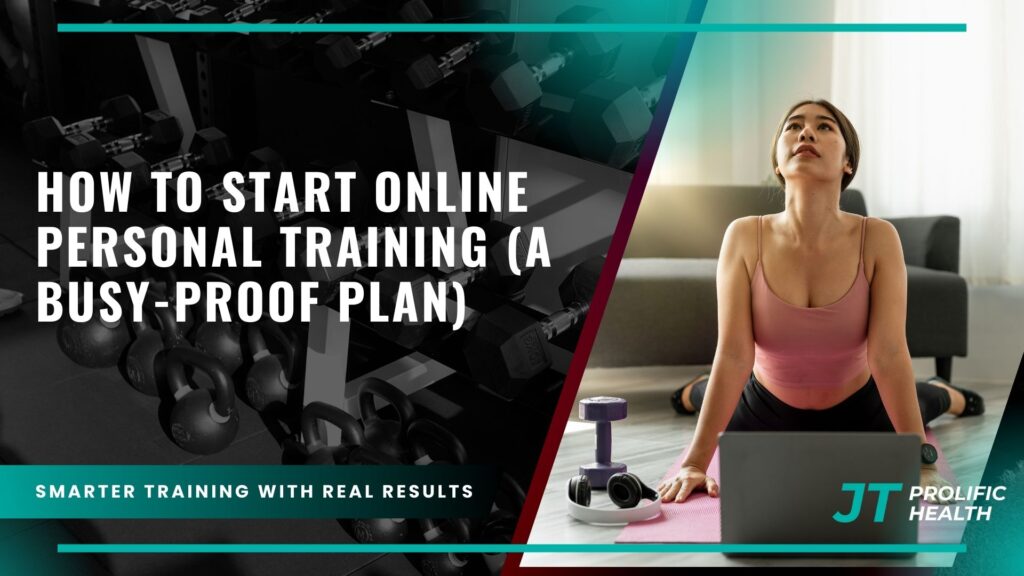
If you’ve been wondering How to Start Online Personal Training, how to start online personal training, you’re probably not looking for another random workout you’ll quit in two weeks—you want a plan that fits your schedule, your stress level, and your body. We can absolutely build that, and we’ll do it in a way that prioritizes safety, recovery, and steady momentum over “go hard or go home.”
Online training works best when it’s more than PDFs and willpower. The difference between “DIY workouts” and real coaching is support, progression that adapts as you change, and accountability when life gets busy—exactly what you get with Prolific Health’s Online Coaching or Hybrid Personal Training & Coaching.
Key Takeaways
-
You’ll get better results online when there’s real coaching (feedback, adjustments, accountability), not just a static plan.
-
Start with a baseline (schedule, stress, injuries, equipment) so your plan fits your life instead of fighting it.
-
Use simple weekly targets (movement + strength) and progress gradually.
-
Recovery isn’t “extra”—it’s where adaptation happens, and it protects consistency.
-
Avoid gym “grind culture”; busy professionals usually need sustainable intensity, not maximum intensity.
-
If you want safety and follow-through, choose coaching (private, group, or hybrid) instead of staying DIY forever.
Overview
In this guide, you’ll learn how to start online personal training in a practical, holistic way: choosing the right coaching format, setting baselines, building a weekly structure, and making nutrition/recovery doable on a packed calendar.
You’ll leave with a clear first-week setup, a simple routine template, and answers to common questions people ask before they commit to coaching.
1) Choose Your Online Format
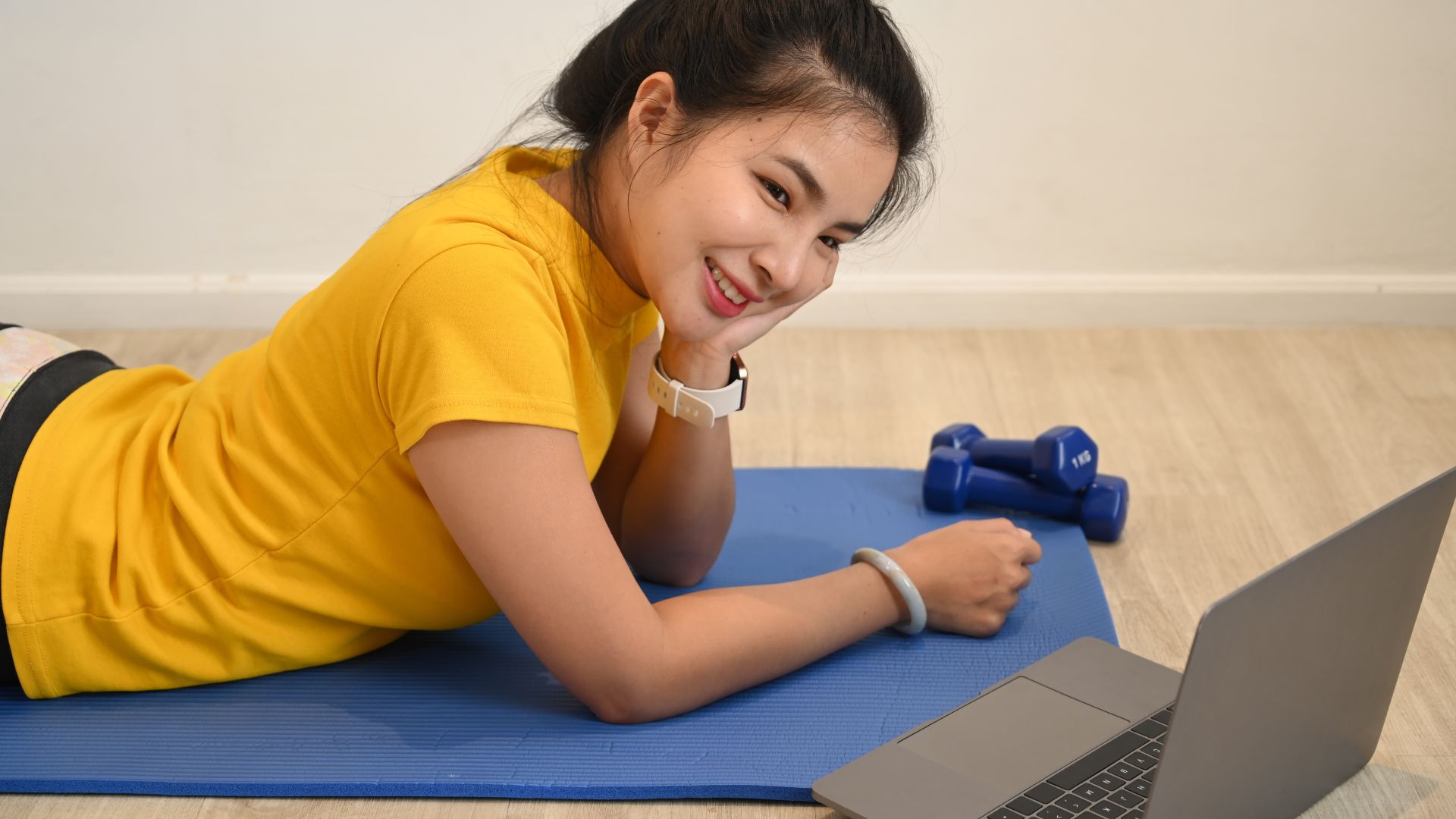
Online personal training can mean different things, so choosing the right structure is your first win.
Live, hybrid, or program-only?
Use your real life (not your “perfect week”) to decide:
-
Live online sessions: Best if you want form feedback, real-time coaching, and you tend to “talk yourself out of workouts.”
-
Hybrid coaching (live + app/check-ins): Best if your schedule changes weekly and you still want accountability and progression—see Hybrid Personal Training & Coaching.
-
Program-only templates: Best as a short-term bridge, but many busy people stall because there’s no adjustment, no feedback, and no consequence for skipping.
If your goal is long-term change, you want enough support that motivation isn’t your main strategy—this is the core difference between Online Coaching and generic plans.
2) Build Your Starting Point (So Your Plan Fits)

A good online plan starts with context, not intensity. Before we push workouts harder, we look at the inputs that control results: time, sleep, stress, pain history, and what equipment you actually have access to.
Your 15-minute baseline checklist
Take 15 minutes and write these down:
-
Your weekly schedule reality: Which 3–4 days are most reliable for training?
-
Your energy pattern: When do you feel strongest—morning, lunch, or evening?
-
Your movement limitations: Old injuries, recurring tightness, or pain triggers (especially back, knees, shoulders).
-
Your current activity level: Are you already walking or mostly sitting?
-
Your equipment: A pair of dumbbells, bands, a mat, and a stable chair can cover a lot—but we plan with what you truly have.
If anything hurts in a sharp, worsening, or “something’s not right” way, that’s a stop sign—not a challenge to push through.
A simple “readiness” self-check
On a 1–10 scale, rate:
-
Sleep quality
-
Stress load
-
Soreness
-
Motivation
When two or more are under 5, we don’t quit—we adjust the session (shorter, lighter, more mobility, more breathing work). This is one reason coached training beats DIY: you keep progressing without breaking your routine.
3) Set Goals You Can Actually Keep
Busy professionals don’t fail because they “don’t want it enough.” They fail because the goal is disconnected from the process. You’ll do better when you tie your goal to weekly actions you can control—then measure progress in more ways than just the scale.
Turn outcome goals into process goals
If your goal is “lose 15 pounds,” your process goals might be:
-
Strength train 2–3x/week
-
Walk 20 minutes 3–5x/week
-
Hit a consistent protein-at-meals habit
-
Sleep a little more consistently
If you want a deeper framework, use Prolific Health’s guide on outcome vs. process goals: Prolific Health’s Approach to Outcome Goals Setting.
What progress looks like (besides weight)
Depending on your goal, track:
-
Strength: reps/loads improving gradually
-
Movement: better squat depth, less back tightness, smoother push-ups
-
Energy: fewer crashes, better focus
-
Consistency: workouts completed per week (this matters more than “perfect” workouts)
When you track the right signals, you feel momentum sooner—and that reduces the urge to quit.
4) Build Your Weekly Training Structure
A realistic weekly structure usually beats an intense “perfect plan.” A simple backbone for most people is consistent movement plus a few strength-focused sessions (and Prolific Health’s article on consistency is a helpful reference point): Training Consistency: The Key to Sustainable Fitness Results.
Your “busy week” template
Here are two starter options.
Option A: 3-day strength + short walks
-
Strength: 3 days (35–55 minutes)
-
Walking: 15–25 minutes on 3–5 days
-
One recovery-focused day (mobility + easy movement)
Option B: 2-day strength + more movement
-
Strength: 2 days (45–60 minutes)
-
Cardio: 2–3 days (20–30 minutes)
-
Daily “movement snacks” (5–10 minutes)
If you want cardio ideas that are easy to implement at home or while traveling, use: Prolific Health Guides You Through Cardiovascular Exercises.
Progression without burnout
Progression is how your body adapts, but it doesn’t have to mean adding load every session. You can progress by adjusting:
-
Reps
-
Sets
-
Rest times
-
Range of motion
-
Exercise variation
If you want a clean, sustainable way to think about progressions (without random program-hopping), see: Mastering Exercise Progressions: The Key to Sustainable Strength.
5) Train for Results, Not Grind
Grind culture tells you soreness equals success and exhaustion equals discipline. That mindset is risky for busy professionals because it competes with your job, parenting, and sleep—then consistency collapses.
If you want the “big picture” approach behind sustainable progress, read: Training Philosophy.
What “hard enough” really means
Most of your sessions should feel like you worked, but you could still function afterward. If every workout wipes you out, you’ll start skipping sessions—and the program stops working because it stops happening.
Recovery is part of the plan
Recovery includes sleep, lower-stress days, mobility work, and realistic training volume. If you’re already exhausted, start with slightly less volume and build upward once you prove consistency.
Nutrition Basics (Simple, Not Perfect)
Nutrition doesn’t need to become another job. Your goal is to support training, manage energy, and keep meals repeatable.
Start with a few high-impact habits:
-
Eat protein with most meals (supports recovery and fullness).
-
Add color (fruit/veg) daily for fiber and micronutrients.
-
Hydrate earlier in the day, not just at night.
A quick glossary (so you’re not guessing)
-
Macros: Protein, carbohydrates, and fats—the main fuel/building blocks in food.
-
Calorie deficit: Eating less energy than you burn (often used for fat loss).
-
Hypertrophy: Muscle growth from training stimulus + recovery.
The point isn’t to track forever; it’s to learn enough to make smart defaults on busy days.
The First 7 Days: Your Start Plan
If you want a clean start, here’s a simple 7-day rollout that keeps friction low.
Day 1: Pick your coaching format and schedule
Choose your training days and times first, then fill workouts into those slots. Don’t do it the other way around.
Day 2: Do a baseline session
Keep it moderate, stop a couple reps before failure, and pay attention to how your joints feel. This gives you data for progression without guessing.
Day 3: Add easy movement
Walk, mobility, or a short bike—something that helps your stress level.
Day 4: Strength session #2
Repeat patterns (squat/hinge/push/pull/carry) with small adjustments.
Day 5: Plan your “default meals”
Pick 2–3 breakfasts and 2–3 lunches you can repeat. This reduces decision fatigue.
Day 6: Optional conditioning or fun activity
Keep it simple and choose something you don’t dread.
Day 7: Review and adjust
Ask: What was easy to follow? What was hard to follow? Then adapt.
If you’re new to coached training in general, this guide helps you feel confident before you start: How to Prepare for Personal Training: Beginner’s Guide.
Why Coaching Beats DIY Long-Term
DIY can work for a while, but most busy people hit the same wall: they don’t know what to change when progress slows, life gets messy, or aches show up.
Coaching gives you:
-
A plan that evolves based on your feedback and performance
-
Accountability that doesn’t depend on motivation
-
Safety checks (form, volume, progression pacing)
-
A reality-based approach that supports work-life balance
If you’ve been debating whether guidance is worth it, read: Is Personal Training Worth It?.
Ready to Start? (CTA)
If you’re ready to stop guessing and want real support with how to start online personal training, Prolific Health can help you build a plan that fits your schedule and your body.
Explore the coaching options:
Or reach out directly here: Contact Prolific Health
Common Questions About How to Start Online Personal Training
Q: How do I start online personal training if I have no equipment?
A: Start with bodyweight patterns (squat, hinge, push, pull, core) and build consistency first. If you want simple ways to add challenge at home later, use: Resistance Band Training at Home: Complete Beginner Guide.
Q: How many days per week should I train when I’m busy?
A: Start with 2 days of strength training and add 2–3 short movement sessions (walks or basic cardio) as recovery allows. For a simple baseline that emphasizes repeatability, see: Training Consistency: The Key to Sustainable Fitness Results.
Q: What’s the difference between online coaching and a generic workout plan?
A: A generic plan is static; coaching adapts based on your feedback, performance, schedule, and stress. If you want a flexible structure with ongoing support, start here: Online Coaching.
Q: Is online personal training safe if I’ve had injuries before?
A: It can be safe when the program accounts for your history, starts conservatively, and progresses in a controlled way. If you want a progression-first approach that prioritizes skill and safety, read: Mastering Exercise Progressions.
Q: How do I know if I’m working hard enough?
A: A helpful standard is finishing most sets feeling like you could do 1–3 more reps with good form. If you’re constantly wiped out, consistency usually drops—and results drop with it.
Q: Can online personal training help with fat loss and energy?
A: Yes—especially when training and daily movement are consistent week to week. A simple place to start for cardio structure is: Cardiovascular Exercises Guide.
Q: What should I track in the first month?
A: Track what drives decisions: workouts completed, loads/reps for key lifts, a simple step or walk target, and sleep quality. Tracking is there to adjust the plan, not to judge you.
Q: Do I need to follow a strict meal plan to see results?
A: Most people don’t need strict rules to start; they need repeatable habits. Start with protein at meals, hydration, and a few default meals you can repeat.
Q: How long does it take to see results with online coaching?
A: Many people feel early wins (energy, strength confidence, better movement) within a few weeks, while bigger body composition changes take longer. The key is progressive programming plus consistency.
Q: What if I start strong and then work gets chaotic?
A: That’s normal—so plan for it. Use “minimum effective” weeks (shorter sessions, fewer sets) so you maintain the habit during high-stress periods, then build again when life calms down.