

For many of us, the traditional image of fitness involves spending six days a week in the gym, dedicating one day entirely to “chest” and another to “legs.” This “body part split” method works well for bodybuilders who can dedicate their lives to training and recovery. However, for the busy professional, parent, or entrepreneur, this approach is often a recipe for inconsistency and burnout.
If you miss “leg day” on Wednesday because a meeting ran late, you might not train legs again for a full week. This is where the full body workout shines. It is not just a backup plan; it is a superior strategy for general population health, offering flexibility, frequency, and functional strength that fits into a demanding schedule rather than competing with it.
Key Takeaways
Higher Frequency: You stimulate muscle growth 2–3 times per week per muscle group, rather than just once.
Missed Workout Insurance: If you miss a session, you haven’t missed an entire body part for the week; you just pick up the next day.
Caloric Efficiency: Working multiple large muscle groups burns more energy per session than isolating small muscles.
Reduced Soreness: Frequent, moderate exposure to training often leads to less severe soreness compared to infrequent, high-volume “obliteration” sessions.
Functional Balance: Training the body as a unit improves coordination and reduces the risk of imbalances.
Overview
In this comprehensive guide, we are dismantling the myth that you need to live in the gym to see results. We will explore the mechanics of a full body workout and why it is the preferred method for those balancing high-performance careers with physical longevity.
You will learn about the importance of compound movements, how to manage fatigue so you don’t ruin your productivity at work, and why “grinding” yourself into the ground is counterproductive. We also cover why self-directed workouts often plateau and how professional coaching provides the structure necessary for safety. Finally, we answer common questions about frequency, duration, and equipment.
The Logic of Total Body Training
The core concept of a full body workout is simple: you train the entire body in a single session, typically three times a week. Instead of doing 20 sets of chest exercises on Monday, you might do 3–4 sets of a chest press on Monday, Wednesday, and Friday.
This approach aligns with the principle of “frequency over volume.” Research suggests that muscle protein synthesis (the process of building muscle) lasts for about 24–48 hours after training. If you only train a muscle once a week, you are missing out on several opportunities to stimulate growth. By hitting the muscle more often, you keep the anabolic signal turned on throughout the week. For beginners, understanding these foundational concepts is crucial. You can read more in our Fitness Training Basics Guide.
Compound Movements: The Foundation
To train the whole body efficiently, we cannot rely on single-joint isolation exercises like bicep curls or calf raises as the main course. We must focus on compound movements—exercises that use multiple joints and muscle groups simultaneously.
A typical session includes:
Knee-Dominant: Squat or Lunge variation.
Hip-Dominant: Deadlift or Hinge variation.
Push: Overhead Press or Bench Press.
Pull: Row or Pull-Up.
Core/Carry: Plank or Farmer’s Carry.
This structure ensures you cover all movement patterns. If you are unsure which variations are safe for your body type, our article on Your Guide to Exercise Selection offers detailed advice on picking the right tools for the job.
Countering “Grind Culture”

Social media often pushes the narrative that if you aren’t crawling out of the gym, you didn’t work hard enough. This “grind culture” is dangerous for the general population. Pushing your body to failure on every set of a full body workout creates immense systemic fatigue.
If your central nervous system is fried from a workout, your ability to focus at work, handle stress at home, or even sleep well can be compromised. At Prolific Health, we advocate for “Stimulus, not annihilation.” We want you to leave the gym feeling energized, not depleted. This approach helps manage your allostatic load—the total stress your body accumulates from life and exercise. To understand why we prioritize recovery breaks even during workouts, check out Understanding Rest Periods.
The Mental Health Connection
Exercise should be a stress reliever, not a stressor. A manageable routine that you can stick to builds confidence. The psychological win of completing three high-quality sessions a week is far superior to the guilt of failing to stick to an unrealistic six-day split. Read more about the mental benefits in How Personal Training Reduces Stress.
Recovery and Adaptation

In a total body routine, recovery is built into the schedule. You train hard on Monday, rest on Tuesday, train on Wednesday, and so on. These rest days are where the magic happens. Your muscles repair, your nervous system resets, and your energy stores replenish.
Many people try to speed up the process by adding extra workouts on rest days. This is often a mistake. Without adequate downtime, you risk overtraining and injury. We track specific markers to make sure your body is ready for the next session. To see exactly what we look for before building a program, review our Fitness Assessment Tests.
Why DIY Workouts Eventually Fail
While the concept of a full body workout is straightforward, the execution is complex. Many people who try to do this on their own run into two main problems:
Improper Form: Compound movements like deadlifts require technical precision. Without a coach’s eye, small errors can lead to chronic back or knee pain.
Lack of Progression: Doing the same 3 sets of 10 reps with the same weight for months will result in a plateau. You must apply progressive overload—slowly increasing the challenge over time.
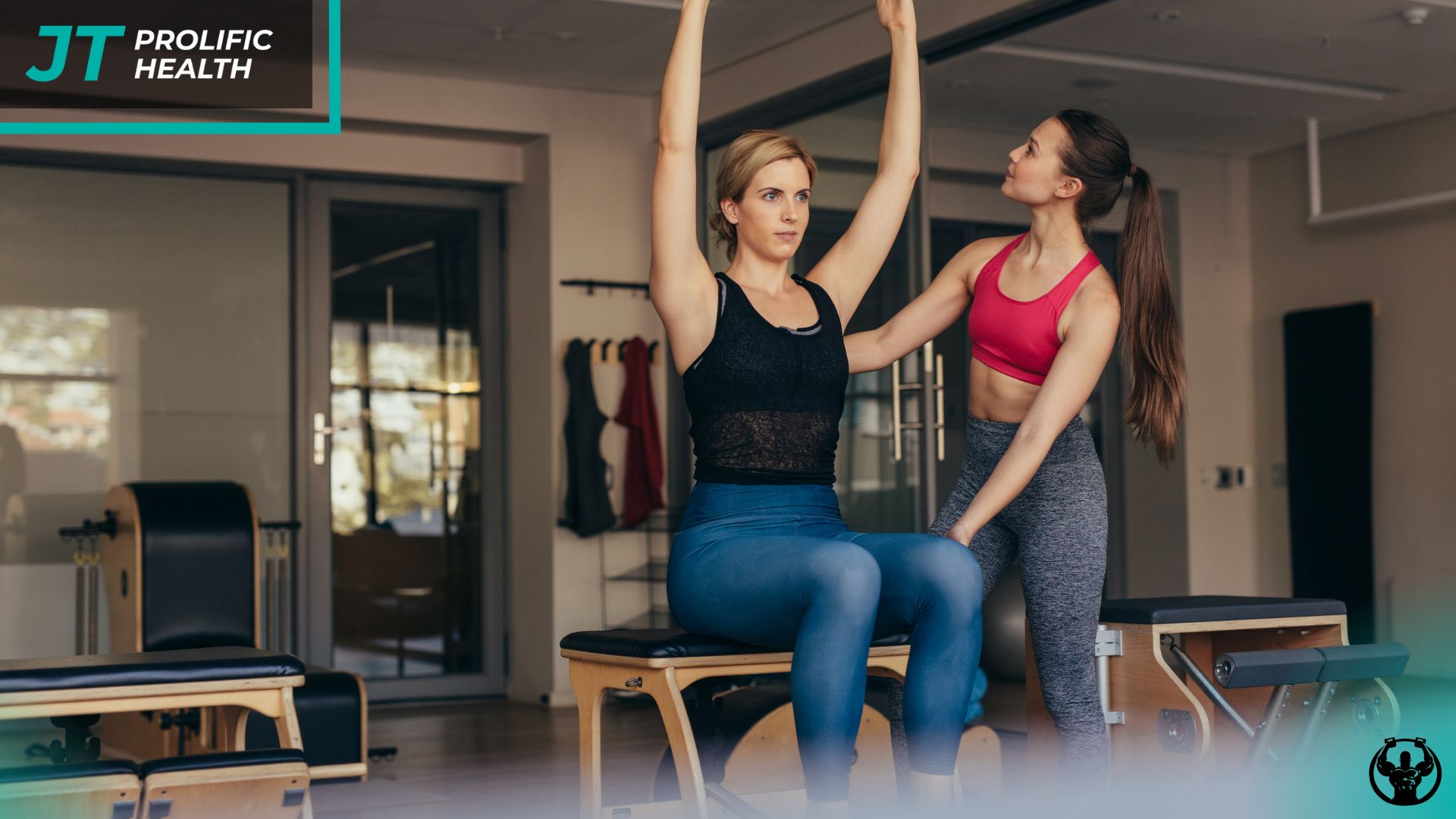
This is where professional coaching becomes indispensable. We don’t just count reps; we manage the variables. We determine when to push you and when to pull back. Transitioning from DIY to a structured service like our Small Group or Private Training ensures you are not just exercising, but actually training toward a goal with accountability.
Stop Guessing, Start Progressing
Building a strong, resilient body requires a plan, not just effort. At Prolific Health, we design full body workout programs that fit your life, ensuring you get maximum results without the burnout.
Visit us at: 7471 Blundell Road, Richmond, BC, V6Y 1J6, Canada. Call us: +1 604 818 6123. Lead Trainer:Jason Tam.
Common Questions About Full Body Workout
Q: Can I do a full body workout every day?A: No, we do not advise it. Because you are taxing all major muscle groups in every session, your body needs at least 24–48 hours to recover. Training the same muscles daily prevents repair and increases injury risk. A frequency of 3 to 4 times per week is optimal for most people.
Q: Is this type of training good for weight loss?A: Yes, it is highly effective. Compound movements used in these sessions require significant energy expenditure. Furthermore, building muscle increases your resting metabolic rate. When combined with proper nutrition, this training style supports sustainable body composition changes.
Q: How long should the workout take?A: A well-designed session should take between 45 to 60 minutes. If you are spending two hours in the gym, you are likely resting too long or doing too much “junk volume.” Efficiency is key to maintaining intensity and focus.
Q: Do I need machines or free weights?A: You can use a mix of both. Free weights (dumbbells, barbells, kettlebells) are excellent for building stabilizer muscles and coordination. Machines can be useful for safely loading a movement when you are fatigued or working around an injury. A good coach will utilize whatever tools serve your body best.
Q: Will I get “bulky” from full body training?A: Getting “bulky” requires a surplus of calories and very specific, high-volume hypertrophy training over many years. For the general population, this training style results in a lean, athletic physique with improved muscle tone, rather than excessive bulk.
Q: What should I do on my off days?A: “Rest” does not mean “sedentary.” We encourage active recovery, such as walking, light cycling, yoga, or mobility work. The goal is to keep moving to promote blood flow without inducing fatigue that would interfere with your next lifting session.
Q: Is this suitable for complete beginners?A: Absolutely. In fact, it is the best way to start. It allows you to practice the skill of the movements frequently without excessive soreness. Frequency helps neural pathways form faster, meaning you learn the exercise technique quicker than if you only did it once a week.
Q: Can I focus on specific areas, like arms or abs?A: Yes. While the core of the workout is compound movements, we often finish sessions with “accessory work.” This is where we can add isolation exercises for arms, abs, or calves to address aesthetic goals or specific weaknesses.
Conclusion: The Smarter Way to Train
Embracing a full body workout is about recognizing that your time is valuable. It allows you to build a body that is strong, capable, and resilient without demanding that you sacrifice your career or family time. By focusing on movement quality, adequate recovery, and consistent effort, you create a sustainable habit that lasts a lifetime.
Ready to optimize your time and health?Contact Prolific Health today to book your consultation. Let us design a full body workout strategy that respects your schedule and delivers real, measurable results.