When you are serious about taking control of your health, you might find yourself considering an unconventional route: becoming an expert yourself. We often see enthusiasts Googling “how much is personal training course” with the idea that they can learn the secrets of physiology and program design to fix their own fitness struggles. It is a logical thought process—why rent the knowledge when you can own it?
However, the price on the sticker is rarely the true cost. For busy professionals in Richmond, BC, the investment isn’t just financial; it is the hundreds of hours required to filter through textbooks, decipher conflicting studies, and master biomechanics. At Prolific Health, we believe that your health deserves expertise, but your time deserves respect.
Key Takeaways
Financial Investment: Quality personal training certifications typically cost between $800 and $2,000+, not including study materials or recertification.
The Time Factor: Mastering the material requires 3–6 months of dedicated study, a luxury most busy professionals do not have.
Theory vs. Practice: A course teaches you the textbook definition of a squat; a coach teaches you how your body should squat safely.
The DIY Trap: Self-teaching lacks the objective feedback loop necessary to correct form and prevent injury.
Efficient Results: Hiring a professional allows you to leverage their thousands of hours of experience immediately, skipping the learning curve.
Overview
In this guide, we will answer the literal question of how much is personal training course tuition in 2026, breaking down the costs of major certifications. But more importantly, we will explore whether this “DIY education” approach is the most effective way to reach your health goals. We will discuss the difference between textbook knowledge and practical application, the hidden costs of trial and error, and why acquiring our coaching service is often the safer, more accountable route. Finally, we will address common questions and provide a clear path forward for your fitness journey.
The Literal Cost: What Certifications Charge
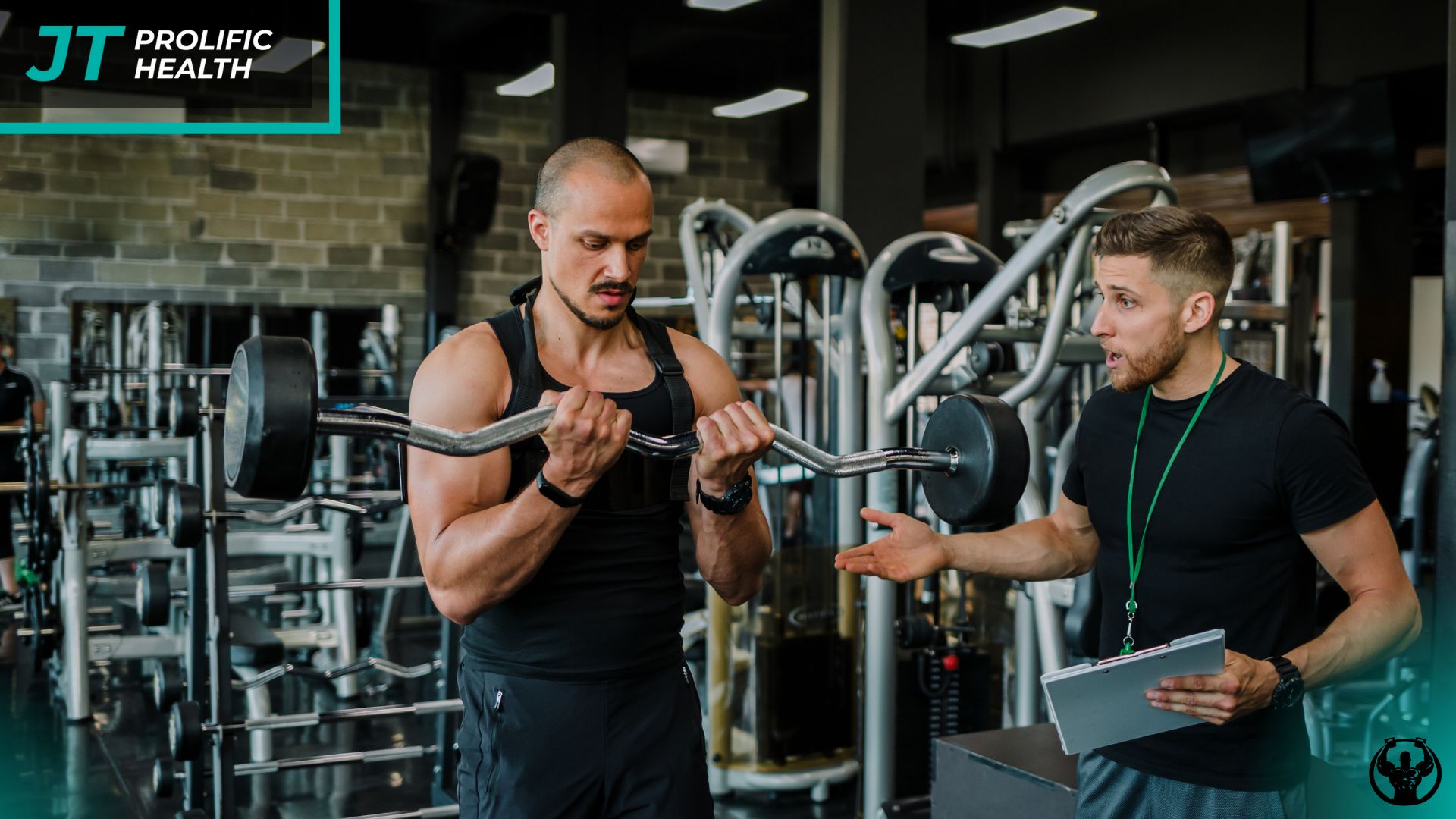
If you are looking strictly at the numbers, the entry fee for fitness education varies. Major accredited organizations like NASM, ACE, or NSCA generally price their base packages between $800 and $1,500 CAD.
Basic Packages: Often cover the exam fee and a digital textbook.
Comprehensive Packages: Can run upwards of $2,500, including workshops, mentorships, and additional specializations like nutrition or corrective exercise.
Recertification: This is the recurring cost. Every two years, trainers must pay for Continuing Education Units (CEUs) to keep their certification valid, which can cost another $500–$1,000.
So, when you ask how much is personal training course tuition, the answer is “a few thousand dollars.” But if your goal is personal health rather than a career change, you must ask: is this the best use of your resources? Read more about The Value of Professional Guidance.
The Hidden Cost: Your Time and Focus

Time is the currency of the busy professional. While spending $1,500 on a course might seem comparable to a package of training sessions, the time commitment is vastly different.
To truly understand the material in a certification course, you need to dedicate 10–20 hours a week for several months. You will be studying anatomy, bioenergetics, and program periodization. For a career trainer, this is essential groundwork. For a busy parent or executive, it is a second job.
By hiring a coach, you are essentially buying back those hundreds of hours. You outsource the programming, the research, and the strategy to us. You simply show up and execute. This allows you to focus your mental energy on your career and family, rather than worrying if your progressive overload strategy is optimal. See our approach to Time Management for Healthy Living.
Theory vs. Reality: The Application Gap
There is a significant difference between knowing what a lunge is and knowing how to lunge with your specific hip structure. A certification course provides generalized knowledge. It teaches the “average” human anatomy. But you are not an average; you are a specific individual with a unique history of injuries, lifestyle stressors, and biomechanical quirks.
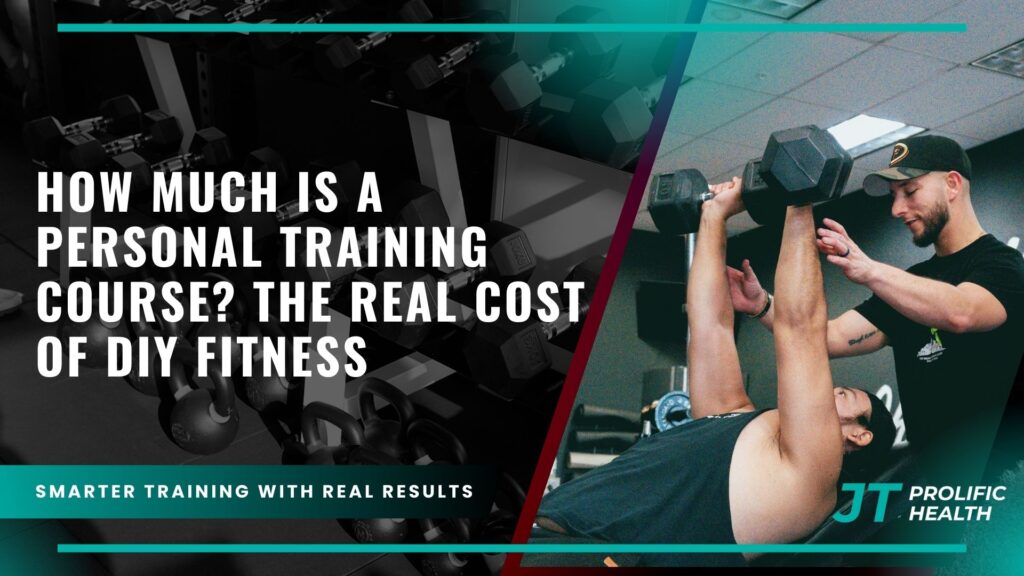
We often see “educated” DIY-ers in the gym who can recite the names of every muscle but still train with poor form because they cannot see themselves move. Without an external eye—a coach—you cannot get the objective feedback needed to ensure safety. A book cannot tell you that your left glute isn’t firing during a deadlift; only a skilled observer can do that. Learn Why Form Matters More Than Weight.
The Accountability Factor
Let’s be honest: knowledge is rarely the bottleneck. Most people know they should eat vegetables and move more. The real challenge is consistency.
You can pass every exam in a personal training course and still struggle to get to the gym on a rainy Tuesday. Self-knowledge does not equal self-discipline. When you acquire our coaching service—whether it is 1-on-1 Personal Training or our Hybrid Coaching—you are investing in accountability. You are hiring a partner who is waiting for you, who tracks your progress, and who adjusts the plan when life gets chaotic. This support system is what turns a “program” into a lifestyle.
Why “Grind Culture” Education Fails
There is a pervasive idea that you must suffer to succeed—that you must “grind” through a 600-page textbook to earn the right to be fit. This mirrors the toxic “grind culture” in the gym, where more pain equals more gain.
We reject this. Health should be accessible, not a burden. You shouldn’t need a degree in kinesiology to live a pain-free life. That is our job. We filter the complex science into actionable, simple steps for you. We navigate the confusing world of fitness trends so you don’t have to. Read our guide on Debunking Fitness Myths.
Making the Smart Investment
If you have $2,000 to invest in your health, where does it go furthest?
Option A (The Course): You spend months studying. You might pass the exam. You then head to the gym alone, with no one to spot you, no one to correct you, and no one to cheer you on.
Option B (The Coach): You start day one with a program built specifically for you. You have an expert ensuring every rep is safe. You have a mentor guiding your nutrition and recovery. You see results faster because you aren’t guessing.
For the general public, Option B is almost always the superior choice for safety, efficiency, and long-term success. Discover The ROI of Personal Training.
Prolific Health Address: 7471 Blundell Road, Richmond, BC, V6Y1J6, Canada Phone: +1 604 818 6123 Founder/Lead Trainer: Jason Tam
Are you ready to stop studying and start transforming? Instead of asking how much is personal training course tuition, ask yourself what your health is worth. Contact us today to schedule your consultation and let us handle the science while you enjoy the results.
Common Questions About How Much Is Personal Training Course
Q: How much does a personal training course cost in Canada?
A: In Canada, certification courses from recognized bodies (like BCRPA, ACE, or NASM) typically range from $800 to $1,500 CAD. This usually includes the exam and study materials but may not include practical workshops or CPR certification.
Q: Is it cheaper to take a course than hire a trainer?
A: Upfront, a course might cost the same as a block of training sessions. However, the course does not provide the coaching, feedback, or personalized programming that a trainer does. In the long run, hiring a trainer is often more cost-effective because you avoid wasted time and potential injury.
Q: Can I train myself if I take a course?
A: You can, but it is difficult. Even the best trainers in the world hire other coaches to train them. It is impossible to be objective about your own movement and effort levels. An external coach provides the unbiased perspective needed for true progress.
Q: What is the best personal training course for beginners?
A: If you are dead set on learning, look for courses that offer practical, in-person components, not just online theory. However, if your goal is simply to get fit, we strongly recommend attending a seminar or workshop rather than a full vocational certification.
Q: Do I need a course to understand nutrition?
A: No. A full certification is overkill for basic nutrition. Working with a knowledgeable coach who can provide nutritional guidance (within their scope) is far more practical for learning how to fuel your body for daily life.
Q: How long does it take to complete a personal training course?
A: Most self-paced online courses take 3 to 6 months to complete. Intensive in-person workshops might be shorter (e.g., weekends over 2 months) but require significant independent study time.
Q: Will a course teach me how to prevent injury?
A: It will teach you the theory of injury prevention. However, applying that theory requires experience. A new graduate often lacks the “clinical eye” to spot subtle movement compensations that lead to pain, which is why working with an experienced coach is safer.
Q: What is the difference between a course and a program?
A: A “course” is an educational curriculum designed to certify you as a professional. A “program” is a specific workout plan designed for a client to follow. At Prolific Health, we design programs, not courses, to get you results.
Conclusion
While researching how much is personal training course tuition shows a commendable desire to learn, it is often a detour on the road to health. You don’t need to be a mechanic to drive a car, and you don’t need to be a certified trainer to build a strong, capable body.
Your best path forward is to partner with professionals who have already done the heavy lifting of education. Let us apply our expertise to your life, ensuring you get the benefits of the science without the burden of the study.
Ready to start your journey with expert guidance? Reach out to Prolific Health today.