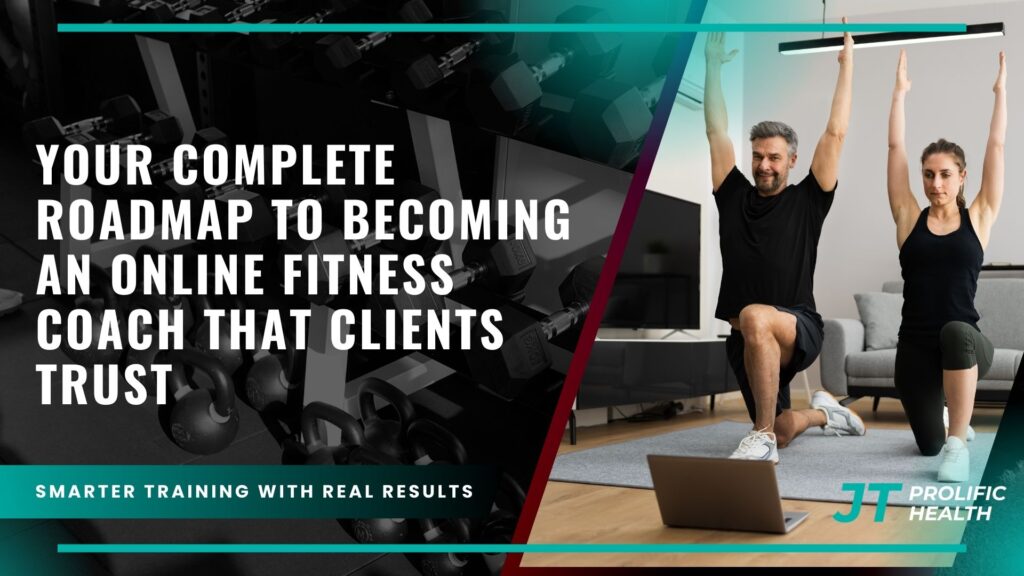
If you’ve ever thought about turning your passion for fitness into a career that works around your life — not the other way around — you’re already thinking in the right direction. Becoming an online fitness coach isn’t just about writing workout plans from your laptop. It’s about building something meaningful: a coaching practice that actually transforms people’s bodies, habits, and confidence, without being chained to a gym schedule or a single location.
The fitness industry has shifted dramatically. More people are seeking qualified, accessible guidance they can follow at home, between meetings, or during a lunch break. That shift has opened a real door for coaches who are ready to show up with skill, structure, and genuine care. Whether you’re a certified personal trainer looking to expand your reach or someone just starting from scratch, learning how to be an online fitness coach today puts you in a position to build a career with lasting impact.
This guide walks you through every important step — from certifications and niche-building to client management and coaching philosophy — so you can launch with clarity instead of guesswork.
Key Takeaways
Certification and credibility matter. Getting a recognized personal training certification (such as NASM or ACE) builds the foundation of trust and safety that clients need. (See how Prolific Health approaches certified coaching: Experience Personal Training Methodology with Prolific Health.)
Niche specificity outperforms generalist marketing. Coaches who speak to a defined audience attract better-fit clients and command stronger positioning.
Your coaching model shapes your entire business. Whether 1-on-1, group, or hybrid, your model affects pricing, scalability, and client outcomes.
Online coaching can match in-person results. Research shows that well-structured online programs deliver comparable — sometimes better — fat loss and strength outcomes.
Systems and templates save time without sacrificing quality. Scalable workflows let you serve more clients without burning out.
Real growth comes through professional accountability. DIY workouts plateau; working with a qualified coach provides the structure, expertise, and motivation to keep progressing. (Read: Benefits of Hiring a Personal Trainer: Why It’s Worth It.)
Overview
This article covers everything you need to know about how to be an online fitness coach — from the first steps of getting certified to defining your niche, structuring your services, and keeping clients consistent. You’ll learn how online coaching compares to in-person training, why the hybrid model is gaining traction, and how to avoid the common mistakes new coaches make.
We also answer the most frequently asked questions coaches have when starting out, and we’ll show you how Prolific Health’s approach to 1-on-1 private training, group strength and conditioning, and hybrid coaching can support both coaches and clients in building real, lasting results.
What Does an Online Fitness Coach Actually Do?
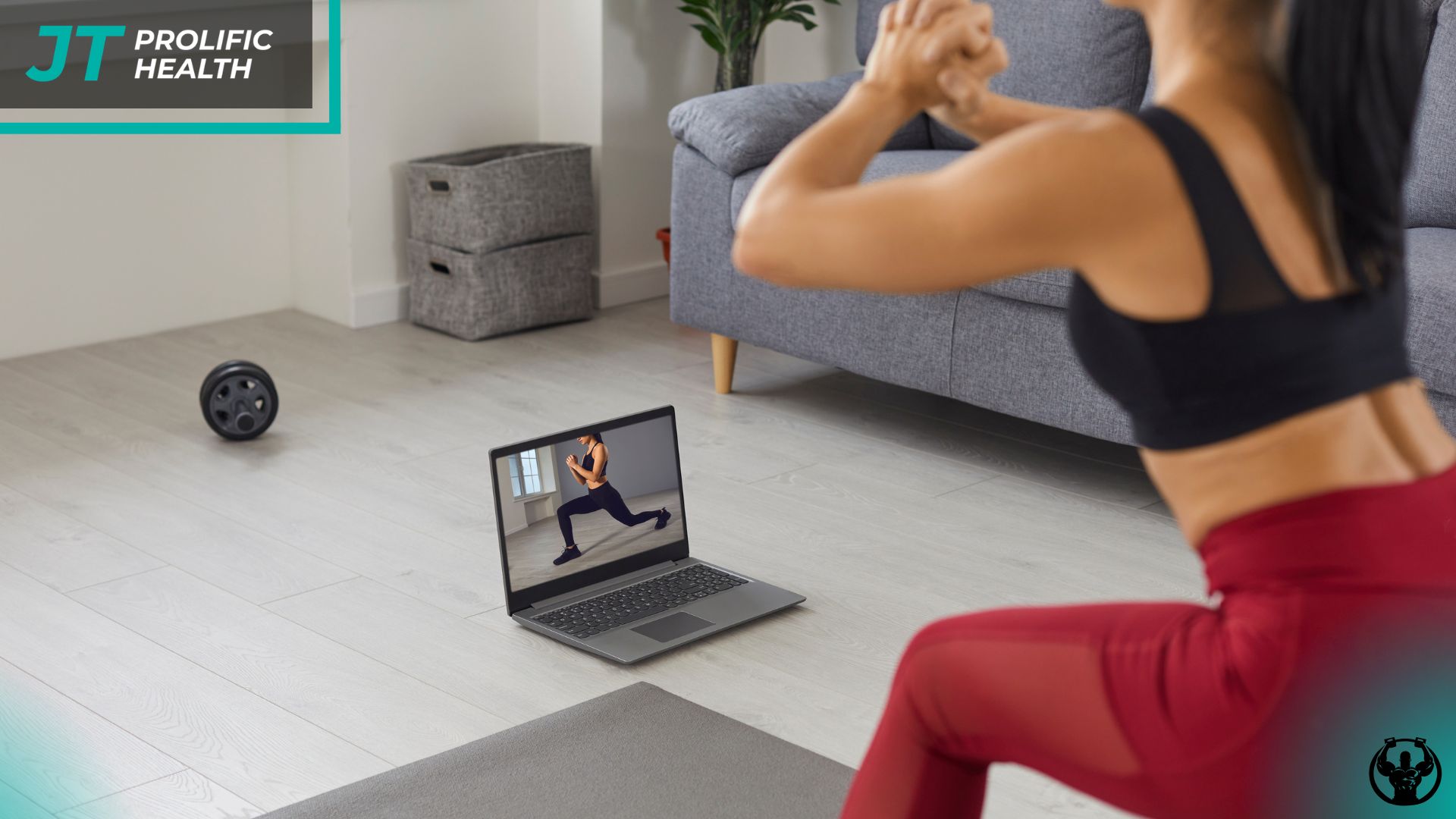
Before diving into the how, it helps to understand what the role actually involves. An online fitness coach works with clients remotely — delivering customized workout programs, nutrition guidance, progress check-ins, and motivation through digital channels like video calls, messaging apps, and coaching software. The work is similar to in-person coaching in many ways, but it requires a different skill set: the ability to communicate clearly in writing, coach technique through video, and build strong client relationships without ever being in the same room. (See Prolific Health’s Online Coaching service for a real-world model of how this works.)
What makes online coaching compelling isn’t just the flexibility — it’s the scope. You can work with clients across time zones, serve people who have no access to quality gyms, and build a practice around your own schedule. But that freedom also demands discipline. Without systems in place, online coaching can become chaotic, inconsistent, and difficult to scale.
Online fitness coaching also means wearing more hats than a traditional trainer. You’ll be your own marketer, client manager, program designer, and accountability partner — all at once. That’s exactly why building your practice on a solid foundation from the start matters so much.
Getting Qualified: Certifications That Build Real Credibility
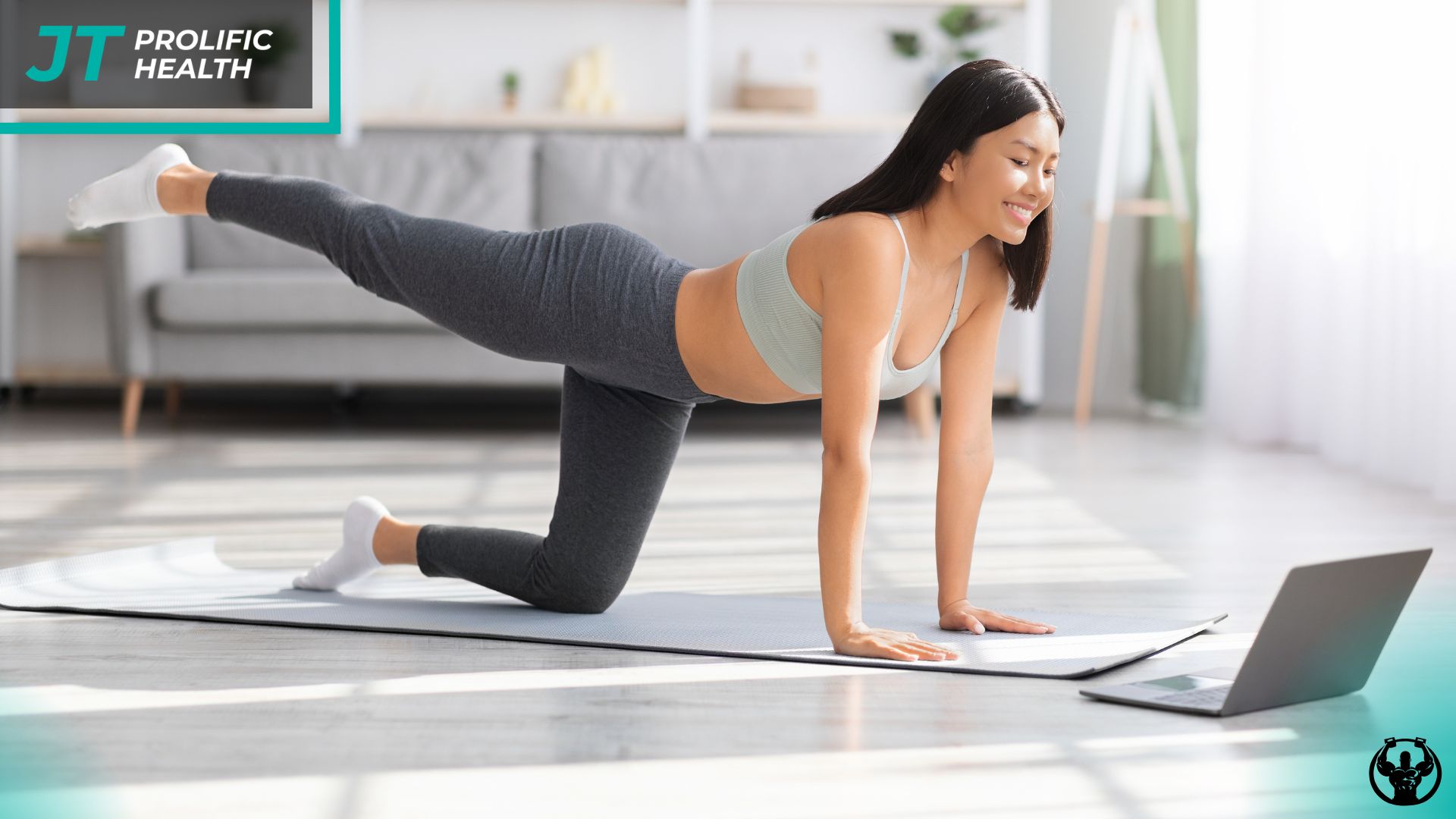
You don’t legally need a certification to call yourself an online fitness coach, but going without one is a significant disadvantage — and a real safety risk to your clients. Reputable certifications like the NASM Certified Personal Trainer (CPT) or the ACE Personal Trainer Certification are widely recognized across the fitness industry and prove that you have the foundational knowledge to prescribe safe, effective programs.
Both NASM and ACE require a high school diploma and a current CPR/AED certification as prerequisites. The NASM CPT program can be completed in as few as four to six weeks with flexible online learning options, making it very accessible for aspiring coaches. NASM also offers a Virtual Coaching Specialist credential specifically for online coaching, which covers virtual assessments, client communication strategies, and digital business fundamentals. (Related read: Exploring Online Learning Platforms for Fitness Professionals.)
Beyond the initial certification, strong online coaches also invest in continuing education — areas like nutrition science, mobility training, mindset coaching, and recovery protocols all add depth to your practice. The more holistically you can support a client, the more valuable — and irreplaceable — you become. (See also: How to Be a Personal Trainer in 2026.)
A note on safety: Certifications aren’t just about marketing. They’re about knowing how to assess a client’s readiness for exercise, recognize contraindications, and program progressively without causing injury. This is non-negotiable when you’re coaching remotely and can’t physically observe someone in real time.
Defining Your Niche: The Difference Between Being Found and Being Ignored
One of the biggest mistakes new coaches make is trying to serve everyone. The idea sounds logical — more potential clients, more revenue — but in practice, a message aimed at everyone lands with no one. When you specialize, your marketing becomes sharper, your content becomes more relevant, and the right clients find you faster.
Think about the specific population you are most equipped and motivated to help. Busy professionals who can only train 30 minutes a day. Parents rebuilding their strength post-pregnancy. Older adults looking to maintain mobility and independence. Each of these groups has distinct pain points, schedules, and goals — and a coach who speaks directly to those realities builds trust immediately.
Your niche doesn’t have to be a narrow demographic forever. Start focused, build authority in that space, and expand once your reputation is established. The coaches who grow the fastest are usually the ones who commit clearly to serving a specific person at a specific stage of their fitness journey. (Helpful reading: Professional Development Planning for Your Career Growth.)
Questions to Help You Define Your Niche
Who do I have the most personal experience helping — or being?
What fitness challenges do I understand at a deep, lived level?
What types of clients energize me, and which ones drain me?
Is there an underserved population that aligns with my expertise?
What outcomes can I realistically and confidently deliver?
Choosing a Coaching Model That Works for Your Life
There is no single right way to structure an online fitness coaching business. The model you choose should reflect your schedule, your goals, and the kind of relationship you want to have with your clients. Here’s a breakdown of the most common approaches:
1-on-1 Coaching is the most personal and typically the most expensive model. You work directly with each client, create individualized programs, and provide hands-on (virtual) accountability. It’s excellent for building deep relationships and delivering strong outcomes, but it can be time-intensive and harder to scale as your client roster grows.
Group Coaching lets you work with multiple clients simultaneously — through live sessions, shared programs, or community challenges. It creates a sense of camaraderie and motivation, and it’s more scalable than 1-on-1. The trade-off is less individual customization per client.
Hybrid Coaching combines the best of both: structured online programming with occasional in-person touchpoints. This is becoming increasingly popular because it maintains human connection while taking advantage of the flexibility and scalability that digital platforms offer. For coaches already working in person, hybrid is often the smoothest first step toward building an online practice.
Self-paced Programs are pre-recorded, automated programs that clients follow on their own schedule. These are ideal for generating passive income, but they require minimal interaction and tend to have lower retention without added accountability features.
At Prolific Health, the approach mirrors this thinking directly — private 1-on-1 training, group strength and conditioning, and hybrid coaching are all offered based on what actually fits a client’s lifestyle, not a one-size-fits-all formula. (Learn about the philosophy behind this: Holistic Personal Training Philosophy.)
The Problem with DIY Workouts (And Why Clients Eventually Outgrow Them)
There’s nothing wrong with starting a fitness journey with a free YouTube video or a downloaded workout plan. Many people do. But here’s what almost always happens: progress stalls. Motivation fades. Confusion about the right exercises, progressions, and recovery creeps in. Without expert guidance, people tend to repeat the same patterns, avoid the movements that scare them, and push harder at exactly the wrong moments.
Self-guided fitness can build a baseline. But it can’t replace real coaching. A qualified coach sees what you can’t see about your own movement patterns, programming gaps, and mental blocks. They hold you accountable not just when you’re motivated, but especially when you’re not. And when something feels off — whether it’s a twinge in your shoulder or a plateau in your training — a coach adjusts the plan before a small problem becomes a serious setback. (Related: Is Personal Training Worth It? A Cost-Benefit Analysis.)
Research from Stanford University found that participants in a structured online coaching program made significant improvements in exercise habits, dietary choices, and weight outcomes compared to those going it alone. The structure and accountability that a real coach provides are what make the difference — not the information itself, which is freely available everywhere.
If you’ve been relying on self-made routines for a while and haven’t seen the progress you hoped for, the gap isn’t effort. It’s expertise and accountability. That’s what a real coaching relationship — whether private, group, or hybrid — actually provides.
Building Your Client System: Structure That Scales
Once you know your niche and coaching model, it’s time to build the infrastructure that keeps your business running smoothly. This is where many coaches underinvest — they’re great at training people but unprepared for the operational side of running a coaching business.
Start with an onboarding form. A well-structured application or intake form does several things at once: it filters out clients who aren’t ready to commit, gives you the information you need to build an effective program, and signals professionalism before the first session even begins. Your form should capture fitness history, current goals, lifestyle constraints, past injuries, and what the client is hoping to get from working with you. (For a client-side look at how this works: How to Prepare for Personal Training: Beginner’s Guide.)
Create reusable program templates. Building every program from scratch for every client is unsustainable as your roster grows. Templates give you a strong starting framework that you then personalize based on the individual’s needs, goals, and schedule. Organize templates by training goal — fat loss, strength building, hypertrophy (muscle growth), mobility — and by experience level so you can match the right foundation to the right client quickly. (See: Exploring Microcycle Training for Optimal Performance Gains for a useful programming framework.)
Set up a reliable communication system. Whether it’s a coaching app, email, or video check-ins, your clients need to know when and how they can reach you, and what to expect in terms of response time. Consistency here builds trust faster than almost anything else.
Build an exercise library. Since you won’t be physically present to demonstrate movements, having clear, well-filmed exercise demonstrations for the movements you commonly prescribe reduces confusion and supports better form. This can be your own video content or a curated collection of instructional references.
Marketing Your Coaching Practice Without Burning Out
You could be the most knowledgeable fitness coach alive, but if nobody knows you exist, your business won’t grow. Marketing doesn’t have to mean shouting into the social media void every day — it means showing up consistently in the places where your ideal clients are already spending their time.
Content that educates builds trust faster than content that sells. Share your perspective on training, recovery, nutrition, and mindset. Answer the questions your ideal clients are already asking. Over time, this positions you as the go-to expert for your specific niche — and that positioning does your selling for you.
Client results and testimonials are your most powerful social proof. When real people share real outcomes from working with you, it speaks directly to the hesitations of prospective clients. Even early in your practice, gathering feedback and documenting progress creates a library of credibility you can build on for years.
Referrals from happy clients outperform almost every paid marketing channel. Focus on delivering exceptional coaching experiences, and your clients become your best ambassadors. Encourage them to share their journey and offer referral incentives that reward loyalty. (See how Prolific Health earns client trust: About Jason Tam.)
Recovery, Mindset, and the Holistic Edge
The coaches who build the most loyal client bases aren’t just programming great workouts. They’re addressing the full picture of what holds someone back from reaching their health goals — and that almost always includes recovery and mindset. (Prolific Health’s full approach: Holistic Personal Training Philosophy.)
Recovery is not optional. Sleep, rest days, stress management, and hydration all directly affect training performance and body composition outcomes. Coaches who dismiss recovery as secondary are setting their clients up for plateaus, burnout, and injury. Educate your clients on sleep hygiene, the role of rest in muscle repair, and how chronic stress elevates cortisol in ways that work directly against fat loss and muscle building goals. (Supporting read: Understanding Rest Periods for Effective Muscle Recovery.)
Mindset is the multiplier. A client can have a perfect program, but if their self-talk is sabotaging, their consistency will suffer. The best online fitness coaches address motivation at its root — not just with pep talks, but with practical strategies like goal-setting frameworks, habit stacking, and helping clients build identity-level beliefs around their health. (Framework support: Prolific Health’s Approach to Outcome Goals Setting.)
A holistic approach to health means recognizing that fitness doesn’t exist in isolation from the rest of life. Work stress, relationship dynamics, sleep quality, and nutrition choices are all interconnected. As an online fitness coach, your ability to hold space for that complexity — without overstepping your scope of practice — is what separates good coaching from great coaching.
Why Professional Coaching Beats Going It Alone
We’ve touched on this, but it’s worth stating plainly: learning how to be an online fitness coach means learning how to be someone people trust with something deeply personal — their health. That trust is built through credentials, consistency, and genuine investment in the client’s outcomes.
For the clients reading this — if you’ve been training on your own and wondering why results aren’t coming, the answer is rarely more effort. It’s usually better direction. A 2023 review published in Sports Medicine found that structured online coaching programs delivered similar or better results for fat loss and strength compared to unsupported self-training. The difference? Accountability, expert programming, and a coach who adjusts the plan when life gets in the way. (See: Benefits of Hiring a Personal Trainer: Why It’s Worth It.)
That’s what professional coaching — whether it’s private training, group strength sessions, or a hybrid model — actually delivers. Not just a program, but a system built around your real life.
Your Next Step Starts Here
If you’re ready to stop guessing and start progressing, Prolific Health is here to help. Led by Jason Tam, our team serves clients in Richmond, BC and beyond through private 1-on-1 personal training, group strength and conditioning, and hybrid coaching designed for busy professionals who want real results without the burnout.
Whether you’re just beginning your fitness journey or ready to take it further than any DIY routine ever could, we build a system that fits your actual life. Reach out via our Contact page or call +1 604 818 6123. Your journey toward a stronger, more energized version of yourself can start today — and at Prolific Health, we’re committed to walking that path with you every step of the way.
Common Questions About How to Be an Online Fitness Coach
Q: Do I need a certification to become an online fitness coach?
A: While no law requires a certification to coach online, getting certified through a recognized body like NASM or ACE dramatically increases your credibility, helps you keep clients safe, and is often required by insurance providers. Most serious clients will ask about your credentials before committing. Certifications like the NASM CPT can be completed in four to six weeks entirely online. (Related: Exploring Online Learning Platforms for Fitness Professionals.)
Q: How much can an online fitness coach earn?
A: Earnings vary widely depending on your niche, model, and client volume. 1-on-1 online coaches often charge between $100–$250 per client per month, while group programs and self-paced courses can generate additional or passive income streams. As your reputation and client base grow, scaling a hybrid model is one of the most effective ways to increase revenue without working more hours. (For a pricing reference point from the client side: How Much Personal Training Cost? 2026 Pricing & Value Guide.)
Q: What equipment do I need to start coaching online?
A: You don’t need much to start. A reliable computer or smartphone, a stable internet connection, and a video conferencing tool cover the basics. As your business grows, you may invest in coaching software for program delivery, payment processing, and client communication — all of which streamline the experience for both you and your clients.
Q: Is online fitness coaching as effective as in-person training?
A: Yes, when done well. A 2023 study in Sports Medicine found that structured online coaching programs produce comparable results to in-person training for fat loss and muscle gain. The key factors are program quality, coach communication, and client accountability — all of which can be achieved remotely with the right systems in place. (See our Online Coaching service page for Prolific Health’s remote approach.)
Q: How do I find my first online coaching clients?
A: Start with people you already know — former gym clients, friends, or community members who know your work. Offer a discounted or beta rate in exchange for honest feedback and testimonials. From there, content marketing on one or two social platforms, combined with referrals, is one of the most sustainable ways to grow an online coaching audience.
Q: How many clients can I realistically manage as an online coach?
A: For 1-on-1 coaching, most coaches can comfortably manage 15–30 clients depending on the level of service they provide. Group coaching and hybrid models significantly increase that capacity, since you’re serving multiple clients simultaneously or leveraging pre-built program templates. The key is building efficient workflows before you scale.
Q: What’s the difference between a personal trainer and an online fitness coach?
A: The titles are often used interchangeably, but the delivery differs. A personal trainer traditionally works in person, supervising sessions in real time. An online fitness coach works remotely, delivering programs and support through digital channels. Both require expertise, accountability skills, and strong communication — online coaching simply adds the layer of technology to bridge the physical distance. (See: How to Be a Personal Trainer in 2026.)
Q: Should I specialize in a niche or offer general fitness coaching?
A: Specializing in a niche is strongly recommended, especially when starting out. A focused message attracts better-fit clients, simplifies your marketing, and allows you to build deeper expertise faster. Coaches who try to serve everyone often struggle to stand out. Once you’ve established authority in a niche, you can expand your offerings from a position of strength.
Q: How do I keep clients accountable in an online coaching program?
A: Accountability in online coaching comes from regular check-ins (weekly calls or messages), progress tracking systems, clear goal-setting, and a strong onboarding process that sets expectations from day one. Clients who feel seen and supported — even remotely — are far more likely to stay consistent and see results. (Related: Prolific Health’s Approach to Outcome Goals Setting.)
Q: What are the biggest mistakes new online fitness coaches make?
A: The most common mistakes include: trying to serve too broad an audience, not having an onboarding or intake process, building programs from scratch every time instead of using templates, neglecting consistent marketing, and underpricing services out of insecurity. Building systems early — before you feel like you need them — sets the foundation for a sustainable coaching business. (Related: Professional Development Planning for Your Career Growth.)
Conclusion
Building a career as an online fitness coach takes more than passion. It takes credentials, clarity, and a coaching philosophy that genuinely puts the client first. From getting certified and defining your niche to structuring your services and embracing a holistic approach to health, every step you take toward becoming a better coach is a step toward better outcomes for the people you serve.
For those on the client side of this conversation: you’ve likely already tried going it alone. You’ve done the research, downloaded the plans, and put in the effort. But sustainable progress — the kind that lasts beyond a few weeks — comes from working with someone who knows how to guide you through the inevitable plateaus, setbacks, and schedule disruptions that real life throws in the way. That’s what professional coaching is truly for.
At Prolific Health, led by Jason Tam in Richmond, BC, we specialize in helping busy professionals and individuals who want more from their fitness — more clarity, more results, and more confidence — through private training, group strength coaching, and flexible hybrid programs built around your real life. Take the first real step in your fitness journey: connect with Prolific Health via the Contact page or call +1 604 818 6123 and discover what coaching with true purpose feels like.