
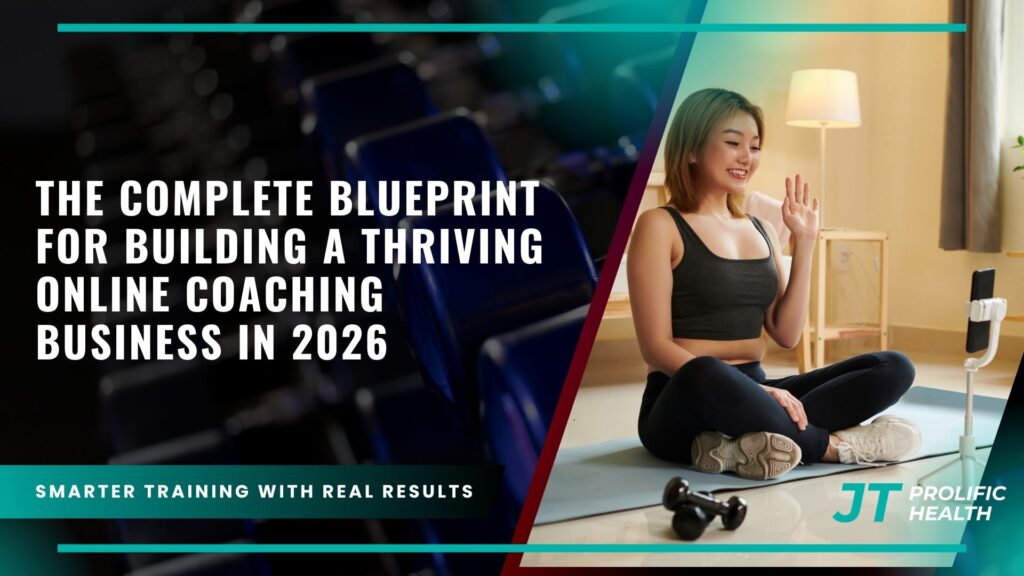
Becoming an online coach is a direct path to building a location-independent business that transforms lives while generating substantial income. The core requirement is not a specific degree, but a combination of deep expertise in a high-demand area, a structured coaching framework, and a systematic approach to attracting clients digitally. In 2026, the online coaching industry has matured, demanding more than just passion—it requires a professional, results-driven methodology.
Key Takeaways
- Identify a micro-niche where you have demonstrable expertise and market demand exists.
- Formalize your knowledge with a recognized certification to build instant credibility.
- Develop a signature coaching framework that delivers predictable client transformations.
- Set up a lean but professional tech stack including a website, scheduling, and video conferencing tools.
- Price your services based on the value of the outcome, not the time spent.
- Build a consistent content engine on one primary platform to attract organic leads.
- Master the “chemistry call” to convert prospects into high-paying clients without being salesy.
Defining Your Coaching Niche and Ideal Client

Generalist coaching is a fast track to obscurity. The most profitable online coaches in 2026 operate in tightly defined micro-niches. According to the International Coaching Federation (ICF), coaches with a clear specialization report 34% higher annual revenues than generalists. Your niche should sit at the intersection of your personal experience, a painful problem, and a group of people willing to pay to solve it. For example, instead of “fitness coaching,” a viable micro-niche is “strength training for postpartum women with diastasis recti.” Instead of “business coaching,” consider “pricing strategy for freelance UX designers.”
To validate your niche, conduct a “market pain audit.” Spend time in online communities like Reddit, specialized Facebook groups, or Quora. Look for recurring frustrations, language patterns, and questions that go unanswered. Research from Thinkific shows that 68% of successful online coaches spent at least two weeks validating their idea before building any infrastructure. Document the exact words your ideal clients use to describe their struggles; this language becomes the foundation of your marketing copy.
Building Credibility Through Certification and Continuous Education

While life experience is valuable, formal credentials act as a trust accelerant. The coaching industry remains largely unregulated, which makes third-party validation a powerful differentiator. A 2025 study by PricewaterhouseCoopers found that 72% of consumers are willing to pay a premium for services from certified professionals. Pursuing a credential from a body like the ICF, the National Board for Health and Wellness Coaching (NBHWC), or a niche-specific organization signals a commitment to ethical standards and proven methodologies.
Beyond initial certification, commit to a specialized methodology. Cognitive Behavioral Coaching (CBC), Neuro-Linguistic Programming (NLP), or Somatic Coaching are examples of modalities that deepen your toolkit. As Dr. Elena Torres, Director of Coaching Psychology at the Institute of Professional Excellence in Coaching (iPEC), explains: “A coach who relies solely on intuition will eventually hit a ceiling. Integrating evidence-based psychological frameworks allows you to facilitate breakthroughs that amateur coaches simply cannot replicate.” This depth of knowledge directly translates into higher client retention and referral rates.
Crafting Your Signature Coaching Framework
A signature framework transforms your coaching from a vague conversation into a predictable, high-value process. This is a step-by-step roadmap that takes a client from their current state to their desired outcome. It is your primary intellectual property and the core of your marketing message. For instance, a career transition coach might develop the “5-Stage Career Clarity Compass,” while a relationship coach might use the “Reconnection Rhythm Method.”
Your framework should have distinct phases, each with clear objectives and tools. Typically, this includes an assessment phase, a strategy phase, an implementation phase, and a sustainability phase. According to data from CoachAccountable, coaches who use a structured framework see a 41% higher client completion rate. This structure not only improves client results but also allows you to productize your coaching. A clear framework can be delivered in multiple formats: one-on-one packages, group cohorts, or even a self-paced digital course, creating diversified revenue streams.
Setting Up Your Digital Coaching Infrastructure
A lean, professional tech stack eliminates friction and positions you as a serious business owner. The essential components are a website, a scheduling tool, a video conferencing platform, and a client management system. Your website does not need to be complex; a clean, fast-loading WordPress site with a clear description of your framework, client testimonials, and a booking page is sufficient. Use a platform like Calendly or Acuity to automate scheduling and eliminate the back-and-forth of finding a meeting time.
For client sessions, Zoom remains the standard, but platforms like Doxy.me offer HIPAA-compliant options for health and wellness coaches. A Client Relationship Management (CRM) tool like HoneyBook or Dubsado is critical for managing contracts, invoices, and session notes. “The biggest operational mistake new coaches make is trying to manage clients through a patchwork of emails and spreadsheets,” says Marcus Chen, a business systems strategist who has consulted for over 500 coaching businesses. “A $40/month CRM will save you 10 hours of administrative work per month and make you look like a Fortune 500 company.”
Pricing Strategies for Maximum Profitability
Pricing based on hourly rates is a relic of the old economy. In online coaching, you price based on the transformation’s value. A common entry point is a 12-week intensive package, which provides enough time for clients to see measurable results. Research from the ICF indicates that the average hourly equivalent for experienced coaches in North America is $244, but top-tier coaches package their services at $5,000 to $15,000 for a three-month engagement.
Consider a value-based pricing model. If you help a business owner increase their revenue by $50,000, a $5,000 coaching fee represents a 10x return on investment—an easy decision. Structure your offers in tiers: a self-guided digital course at $497, a group coaching program at $2,000, and a premium one-on-one package at $7,500. This “ascension model” captures clients at different budget levels and naturally upgrades them over time. Avoid the common pitfall of undercharging out of fear; low prices attract clients who are less committed and more demanding.
Client Acquisition: The Organic Content Engine
Paid advertising can accelerate growth, but an organic content engine is the sustainable foundation of a coaching business. The goal is to become a “micro-celebrity” in your niche by consistently publishing content that demonstrates your expertise and framework. In 2026, short-form video on platforms like Instagram Reels, TikTok, and YouTube Shorts generates the highest organic reach, but long-form content like podcasts and newsletters builds deeper trust.
Adopt the “Content Trinity” strategy: create one pillar piece of content per week (a 10-minute YouTube video or a podcast episode), repurpose it into three short-form videos, and distill the core insight into a LinkedIn or Threads post. This approach, championed by content marketing expert Ross Simmonds, ensures you maintain a presence on multiple platforms without burning out. The key is to end every piece of content with a clear call to action, directing viewers to a lead magnet—a free resource like a “Niche Clarity Workbook” or a “30-Minute Strategy Audit”—that captures their email address.
Mastering the Chemistry Call and Enrollment Process
A “chemistry call” is a 30- to 45-minute conversation designed to determine if there is a mutual fit, not to deliver a free coaching session. The structure is critical: spend the first 10 minutes understanding the prospect’s current situation and their desired outcome. Then, pivot to explaining your framework and how it directly addresses their specific challenges. The final 10 minutes are for discussing logistics, investment, and next steps.
According to a study by the Sales Readiness Group, using a consultative, question-based approach increases conversion rates by 27% compared to a feature-dump pitch. Ask powerful questions like, “What has this problem cost you in terms of money, time, and energy?” and “If we were having a conversation six months from now, what would need to have happened for you to feel this was a great investment?” These questions help the prospect self-identify the urgency and value of coaching. Never pressure; simply guide them to a logical conclusion. If they are a fit, present your package clearly and ask, “Based on what we’ve discussed, does this feel like the right next step for you?”
Common Pitfalls and How to Avoid Them
Many aspiring coaches fail not from a lack of skill, but from predictable business mistakes. The first is the “Field of Dreams” fallacy—building a website and waiting for clients to come. A website is a digital brochure, not a marketing strategy. Without a proactive client acquisition system, it generates zero leads. The second pitfall is scope creep, where a coach tries to help clients with every problem under the sun. This dilutes your expertise and makes your marketing message confusing.
Another critical error is neglecting the legal and financial foundation. Use a solid coaching agreement that outlines the scope of services, payment terms, intellectual property rights, and a clear distinction between coaching and therapy. The American Psychological Association emphasizes that coaches must recognize the boundaries of their competence and have a referral network for clinical issues. Finally, avoid the comparison trap. Your coaching business is not a competition with established coaches who have been in the game for a decade. Focus on serving your first 10 clients exceptionally well; their testimonials and referrals will build your reputation faster than any viral post.
| Coaching Model | Client Capacity | Revenue Potential | Best For |
|---|---|---|---|
| 1-on-1 High-Ticket | 10-20 clients | $50k – $300k/year | Deep, personalized transformations |
| Group Coaching | 20-100 clients | $60k – $500k/year | Community-driven results, scalability |
| Course + Coaching Hybrid | Unlimited | $100k – $1M+/year | Leveraged income, passive revenue |
| Membership Community | 50-500+ members | $30k – $250k/year | Recurring revenue, ongoing support |
Scaling Beyond One-on-One Coaching
Once you have a consistent roster of one-on-one clients and a proven framework, the next logical step is scaling through group programs. Group coaching allows you to serve more people at a lower price point while maintaining high profitability. A group of 20 clients paying $200 per month generates $4,000 in monthly recurring revenue for a few hours of weekly facilitation. This model also creates a powerful community dynamic where clients support each other, reducing the pressure on you to be the sole source of motivation.
To launch a group program, distill your one-on-one framework into a 8-12 week curriculum. Host weekly live group calls and provide a community space using platforms like Slack or Circle. Record all sessions and create a resource library. As your group program matures, you can introduce a “done-with-you” hybrid model, combining the community and curriculum with occasional private sessions. This creates a mid-tier offer that appeals to clients who want more support than a course but don’t need the full investment of one-on-one coaching.
Leveraging AI and Automation in Your Coaching Practice
In 2026, artificial intelligence is not a replacement for coaches but a powerful augmentation tool. AI can handle administrative tasks, provide data-driven insights, and enhance the client experience between sessions. Tools like AI-powered journaling apps can prompt clients with reflective questions based on their goals, while natural language processing can analyze client check-in forms to flag potential disengagement or emotional distress.
However, the core coaching conversation remains irreplaceably human. A meta-analysis published in the Journal of Technology in Behavioral Science found that while AI-enhanced coaching platforms improved goal adherence by 22%, client satisfaction scores were 35% higher when a human coach was involved in the process. The optimal model is a “bionic coach” approach: use automation for accountability reminders, progress tracking, and resource delivery, while reserving your live energy for deep listening, intuitive questioning, and holding the emotional space for transformation. This hybrid approach allows you to serve more clients without sacrificing the quality of your presence.
Frequently Asked Questions
Do I need a specific degree to become an online coach?
No specific degree is legally required to call yourself a coach in most jurisdictions. However, obtaining a recognized certification from a body like the ICF or NBHWC is highly recommended to build credibility, learn ethical guidelines, and master core coaching competencies that differentiate you from amateurs.
How long does it take to build a profitable online coaching business?
Most coaches who treat their practice as a serious business, rather than a side hobby, begin generating consistent part-time income within 6 to 9 months. Replacing a full-time corporate income typically takes 18 to 24 months of focused effort on client acquisition and framework refinement.
What is the difference between coaching and therapy?
Coaching is a forward-focused, action-oriented partnership designed to help functional individuals achieve specific personal or professional goals. Therapy, or counseling, is a clinical practice that treats mental health disorders, heals trauma, and explores the past. Coaches must stay within their scope of practice and refer clients to licensed therapists when clinical issues arise.
How do I handle a client who isn’t getting results?
First, revisit the coaching agreement and the client’s stated goals. Have an honest conversation about what is blocking progress, which often reveals a deeper fear or a misalignment in the coaching fit. If the issue is motivation, adjust the accountability structure. If it’s a fundamental mismatch, ethically refer them to another professional who can better serve them.
What are the best platforms for hosting online coaching sessions?
Zoom is the industry standard for its reliability and features. For health and wellness coaches requiring HIPAA compliance, Doxy.me or VSee are excellent alternatives. The key is to choose a platform with stable video, screen sharing, and recording capabilities to provide session replays to clients.
How do I protect my coaching business legally?
Use a professionally drafted coaching agreement for every client that clearly defines the scope of services, payment terms, confidentiality limits, and the distinction between coaching and therapy. Form a legal business entity like an LLC to separate your personal and business assets, and obtain professional liability insurance.
Can I coach clients internationally?
Yes, one of the primary benefits of online coaching is the ability to work with clients globally. Be mindful of time zone differences for scheduling and be aware that some countries have regulations around coaching or consulting services. Always process payments in a stable currency and use a platform that handles international transactions smoothly.
Conclusion
The path to becoming a successful online coach in 2026 is clear and accessible, but it demands a strategic blend of deep expertise, structured methodology, and consistent business development. By defining a micro-niche, building a signature framework, setting a value-based pricing model, and mastering the art of the chemistry call, you create a business that is both profitable and profoundly impactful. The market continues to expand as more people seek personalized guidance to navigate career shifts, health goals, and personal growth in an increasingly digital world.
The most critical step is the first one: commit to your niche and begin practicing your coaching conversations, even if it’s for free initially to gather testimonials and refine your framework. The difference between those who dream of coaching and those who make a living from it is simply the courage to start before you feel ready. If you are ready to build a coaching practice that aligns with your expertise and values, contact us today to explore how a structured business foundation can accelerate your journey from aspiring coach to trusted authority.
References
- International Coaching Federation (ICF) – Research on coach specialization and revenue statistics.
- Thinkific – Data on market validation habits of successful online course and coaching creators.
- PricewaterhouseCoopers (PwC) – Consumer willingness to pay premiums for certified professionals.
- Institute of Professional Excellence in Coaching (iPEC) – Expert commentary on coaching methodologies.
- CoachAccountable – Statistics on client completion rates with structured coaching frameworks.
- Sales Readiness Group – Data on consultative selling and conversion rate improvements.
- American Psychological Association – Guidelines on the boundary between coaching and therapy.
- National Board for Health and Wellness Coaching (NBHWC) – Standards for health and wellness coaching credentials.